Marble, with its warm texture, natural patterns, and elegant style, has become a popular building material in both home and commercial decoration. Whether for floors, walls, countertops, or decorative items, its unique character can enhance the quality of a space. However, natural marble comes in many varieties and varies greatly in quality. Judging solely by appearance can easily lead to pitfalls such as cracks, stains, and color differences. This article will guide you through the core aspects of selecting marble scientifically, balancing aesthetics and practicality.
Ⅰ.First, Define Your Needs: The Scenario Determines the Selection Direction
Different scenarios have vastly different performance requirements for marble. Determining the intended use scenario first, and then selecting accordingly, can avoid the problem of “choosing the right aesthetic for the wrong purpose.”
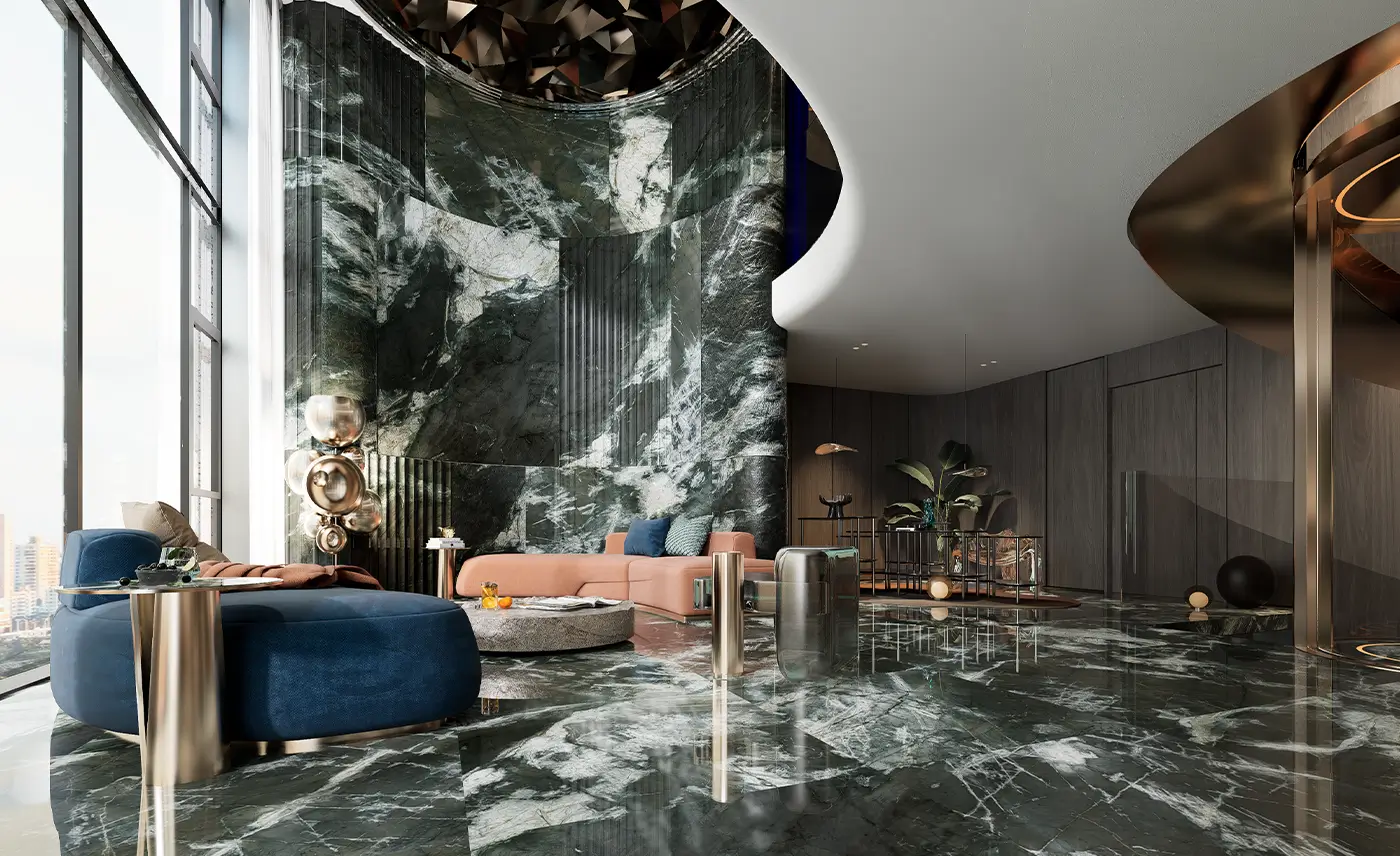
1. Indoor Dry Area Scenarios (Walls, Feature Walls, Decorative Surfaces)
These scenarios are not directly affected by moisture or stains, so the physical performance requirements for marble are lower. Aesthetics and texture can be prioritized. Focus on the continuity of texture and the harmony of color. Choose varieties with unique textures and minimal color difference, such as Jazz White, Elegant White, and Snowflake White, to create a simple yet sophisticated or luxurious atmosphere. Note that for wall surfaces, it is recommended to choose white marble slabs with a thickness of ≥18mm to avoid deformation and hollow spots after installation.
2.Indoor Wet Areas/High-Frequency Use Scenarios (Floors, Bathroom Walls, Kitchen Countertops)
Wet areas need to resist moisture penetration, while high-frequency use scenarios require wear resistance and impact res
istance. When selecting materials, prioritize physical properties, then consider aesthetics. For flooring, it is recommended to choose marble with high density, low water absorption (≤0.5%), and strong wear resistance, such as Saanna Beige or Light Brown Net. Avoid varieties with loose textures and overly fragmented patterns to prevent wear and tear from daily walking and water seepage. If marble is used for bathroom walls, proper waterproofing is essential. Choose a surface treatment with good slip resistance (such as antique or bush-hammered finish) to prevent slipping after showering. For kitchen countertops, which come into contact with oil, acids, and alkalis, pure natural marble is not recommended (it is easily stained and corroded). Consider artificial stone with marble textures or natural marble with special anti-fouling treatments.
3.Outdoor Scenarios (Courtyard Grounds, Exterior Wall Decoration)
Outdoor environments require marble to withstand sunlight, rain, and temperature fluctuations, placing extremely high demands on its weather resistance and frost resistance. Ordinary natural marble is mostly carbonate rock, which is prone to weathering, fading, and cracking when exposed to the elements for extended periods. It is recommended to choose frost-resistant granite (which resembles marble in appearance) or specialized outdoor marble varieties to avoid blindly choosing indoor options, which can lead to a surge in maintenance costs later.
Ⅱ.Core Selection Dimensions: Checking from Appearance to Performance
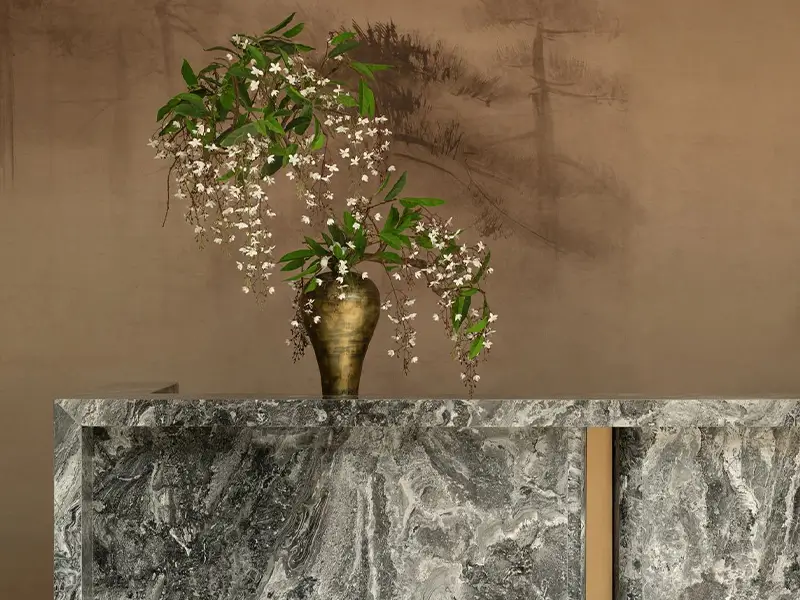
1. Examining Texture and Color: Balancing Naturalness and Harmony
The core charm of marble lies in its natural texture, but the texture also reflects its quality. High-quality marble has clear, natural, and smooth textures, without obvious breaks, blemishes, or holes. If the texture is messy or there are multiple repair marks (with repaired areas showing a significant color difference from the original stone), it is a substandard product. When selecting marble, pay attention to “consistency within the same batch,” especially for large-area installations (such as floors or feature walls). Choose slabs from the same quarry and batch, and observe the color difference and texture continuity after splicing the slabs together to avoid the awkwardness of “one piece dark, one piece light” or “texture breaks.”
Regarding color, choose according to the style of the space: For modern minimalist style, choose white marble or gray marble (volakas white, Calacatta Gray); for light luxury style, choose beige marble or light brown marble (Royal Botticino, Dark Emperador); for Chinese style, choose black marble or brown marble (Nero Margiua, Antico Wood Vein). It’s also important to note that slight color variations in natural marble are normal; excessively pursuing “perfect consistency” may result in purchasing dyed or artificial imitations.
2.Feel the texture: Judging density and smoothness.
Touch the surface of marble. High-quality stone feels delicate and smooth, without any roughness, graininess, or unevenness. If it feels rough or grainy, it may indicate inadequate surface treatment or low stone density. You can also gently tap the stone. High-quality marble produces a clear, melodious sound, indicating a dense texture and no internal cracks. A dull, muffled sound may indicate internal cavities or cracks, making it prone to cracking during use.
3.Test performance: Density and water absorption are key indicators
The density and water absorption rate of natural marble directly determine its durability. A simple preliminary test can be performed: Take a small sample of the stone and drop a drop of water on its surface. Observe the rate of water penetration. High-quality marble has low water absorption; the water droplet will remain spherical for a long time and will not easily penetrate. If the water droplet spreads and penetrates quickly, it indicates low stone density, a loose texture, and susceptibility to stains and cracking when exposed to moisture.
From a professional perspective, it’s important to pay attention to the stone’s compressive strength and abrasion resistance. You can request test reports from the seller. In home settings, marble with a compressive strength ≥100MPa and abrasion resistance ≥10cm³ (the lower the abrasion, the better) is more suitable for high-frequency use.
Ⅲ. Avoiding Pitfalls: Stay Away from These Common Traps
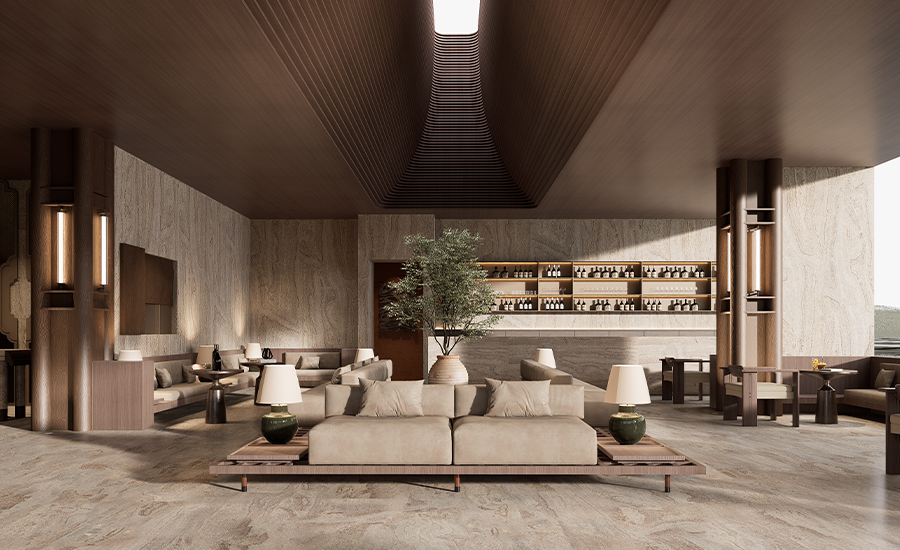
1.Check the craftsmanship: Surface treatment and processing precision
The surface treatment of marble affects its appearance and practicality. Common finishes include polished, matte, antique, and bush-hammered surfaces. Polished surfaces have high gloss and a delicate texture, suitable for walls and feature walls; matte surfaces are understated and soft, avoiding glare, suitable for floors; antique and bush-hammered surfaces offer good slip resistance, suitable for wet areas and outdoors. When selecting marble, check if the surface treatment is uniform. Polished surfaces should be free of scratches and haze, while matte surfaces should have a consistent color without localized bright or dark areas.
Processing precision is also crucial. High-quality marble slabs have a dimensional deviation ≤1mm, uniform thickness, and smooth edges and corners without chipping or missing corners. Large dimensional deviations or damaged edges and corners will increase installation difficulty and affect the paving effect.
2.Beware of “Artificial Stone Impersonating Natural Marble”
Artificial marble tile is inexpensive and has uniform texture, but its quality is far inferior to natural marble. Some vendors dye it and sell it as natural stone. Identification method: Natural marble has unique textures with no repeating patterns; artificial stone has stiff, repetitive textures, and its surface gloss is too uniform. You can also use tools to test it: natural marble has a higher hardness, and scratching its surface with a key will not leave obvious marks; artificial stone has lower hardness and is easily scratched.
3.Reject “Repaired Stone as Premium”
Some vendors repair marble with cracks and holes with resin or glue and then sell it. This type of stone is prone to peeling and cracking at the repair site during use. When identifying it, observe it in bright light; the color of the repaired area will have a slight difference from the original stone, and the reflectivity will also be different. Touching the repaired area may reveal slight bumps or depressions.
4.Don’t Ignore “Later Maintenance Costs”
Natural marble is relatively soft and easily stained and scratched, requiring regular stain prevention and polishing treatments. When choosing marble, consider your maintenance preferences. If you don’t want frequent maintenance, choose marble with high density and low water absorption, or directly choose artificial stone or quartz stone with marble textures (requiring minimal maintenance). If you prefer a natural texture, you need to understand the maintenance process and costs beforehand. For example, gray marble from China is often brittle, while green and black marble are often very hard and have higher processing costs.
5.0Clarify the “Origin and Mine”
The quality of marble from different origins and mines varies greatly even within the same category. For example, Greek Jazz White marble has finer textures and less color variation, while similar stones from other origins may have messy textures and obvious color differences. When choosing, ask the seller about the origin and mine information, and check relevant certificates if necessary, to avoid buying inferior stone from a high-priced source.
Ⅳ.Practical Purchase Tips: From On-site Inspection to Real-world Application, Step by Step

1.Always Examine Large Slabs, Bring Tools for On-site Inspection
Natural marble is affected by geological processes, inevitably having natural flaws such as cracks, sand holes, and color spots. Each piece has a unique texture and color. Judging the overall quality of a slab by only viewing a sample is insufficient to identify hidden flaws and the final installation effect. Therefore, it is essential to inspect the complete slab on-site. It is recommended to bring tools such as a ruler and magnifying glass. Be aware that marble slabs are classified into three grades: superior, first-class, and qualified. If your budget allows, prioritize superior grade. Use instruments to measure the surface for warping or dents, and use a magnifying glass to observe surface smoothness and defects. Pay close attention to the density and thickness of the slab to avoid being sold inferior products and to control quality from the source.
2.Conduct a simple on-site test to visually assess quality
On-site, you can perform a simple test to preliminarily determine the stone quality: Lightly scratch the surface of the slab with your fingernail. If it easily leaves a scratch, it indicates insufficient hardness, poor quality, and a short lifespan. With the seller’s permission, drop water or ink onto the surface of the slab and observe the penetration speed. If the water absorption rate is high and the liquid spreads and penetrates quickly, it indicates low stone density, loose texture, poor stain resistance, and easy staining and discoloration after use. Such stones are not recommended for purchase.
3.Request a layout rendering to control the final aesthetic
The value of marble lies in its unique patterns and colors, and the laying method directly affects the final appearance. A reputable stone supplier can scan the actual patterns of the selected slabs based on the home decoration design drawings, simulate different laying schemes (matched patterns, continuous patterns, random patterns, etc.), and generate a precise layout rendering. Especially for marble with wide, continuous veins, the laying logic must be confirmed through the rendering to avoid broken veins and an overall messy appearance due to mismatched or discontinuous patterns, ensuring the decoration effect meets expectations.
4.Consider overall coordination and match the home decoration style
The overall decoration effect emphasizes harmony; the beauty of a single stone is insufficient to create a high-quality space. When purchasing, it is recommended to bring samples of other decoration materials in your home (such as tiles, wood flooring, cabinet doors, soft furnishings, etc.) to compare with the marble slab on-site. This ensures that the stone’s color and texture are compatible with other elements, avoiding style clashes and jarring color combinations, and ensuring a unified and harmonious overall home decoration style.
5.Clarify Price Components to Avoid Hidden Costs
Marble quotes typically include various fees, such as material costs, processing fees, transportation fees, and installation fees. When inquiring about prices, proactively ask about the type of quote: is it the price for the finished product or just the price per slab? Clarify whether each fee is included. Some vendors offer a package price, while others list them separately; both methods are normal. The key is to confirm all fee details beforehand to avoid disputes over additional charges or hidden costs later.
6.Take Photos and Verify Test Reports to Avoid Counterfeiting Risks
Some natural marble varieties have similar appearances, which unscrupulous vendors can easily exploit by selling inferior products. When purchasing, take photos of the selected slabs and stone models, and compare them one by one upon receipt to ensure the actual product matches the selection. At the same time, be sure to request the vendor to provide a test report for that batch of stone, focusing on verifying the report date (preferably a recent report) and key parameters such as compressive strength, water absorption, and abrasion resistance to confirm compliance with household standards. This process helps avoid the risk of quality fraud.
Ⅴ.Summarize
Compare prices from multiple marble suppliers, prioritizing reputable vendors and brand-name manufacturers. Large companies have ample capital and stable production and quality.
When laying marble over large areas, clearly stipulate in the contract terms “same batch supply,” “color difference range,” and “return and exchange clauses for quality issues” to avoid future disputes.
Choose reasonably based on your budget. Natural marble prices range from several hundred to over a thousand yuan per square meter. Italian and Brazilian marble are often more expensive. Don’t blindly pursue high-end products; choose the most cost-effective option based on your needs and budget.
Before installation, treat the marble with a stain-resistant agent, especially light-colored or porous stones, to effectively reduce the risk of staining.
Selecting marble is an art of balancing aesthetics and practicality. It should match the style of the space and be suitable for the intended use. Thorough quality checks are also essential to ensure the natural stone’s charm lasts. By mastering these points and avoiding common pitfalls, you can select your ideal and durable marble to add a unique texture to your space.