Marble has been around forever. There’s a reason for that. It looks good, it’s durable enough for most applications, and every piece is slightly different—which is either a selling point or a frustration depending on who’s looking at it. Spent some time around stone fabricators and showrooms over the years, and one thing becomes clear quickly: people fall in love with a particular slab, but they don’t always think through the practical details. Size, finish, where it’s going to be used—those matter as much as the veining.
This is a look at custom marble slabs, what’s available, and how to match the material to the job.

Understanding Custom Marble Slabs and Standard Sizes
Marble comes from quarries as large blocks. Those blocks get cut into slabs. The slab dimensions vary by quarry and by the equipment used. But there are typical ranges that most fabricators work with.
Typical Slab Dimensions
Most custom marble slabs start from standard block sizes. Here’s what’s commonly available:
| Finish | Appearance | Stain Resistance | Hides Etches? | Best For |
|---|---|---|---|---|
| Polished | Glossy, reflective | High (when sealed) | No | Low-traffic vanities, walls |
| Honed | Matte, flat | Medium | Yes | Flooring, some countertops |
| Brushed/Leather | Textured, low sheen | Medium-high | Yes | Kitchen islands, high-use areas |
| Tumbled | Aged, soft edges | Low | Yes | Flooring, rustic applications |
Custom Sizing
“Custom” doesn’t usually mean the quarry cuts a unique slab dimension. It means the fabricator takes a standard slab and cuts it to the needed size for a specific project. Countertops, islands, vanities, fireplace surrounds—all cut from the same slabs.
】But there are limits. A slab is only as long as it is. If a kitchen island needs a 12-foot piece with no seams, that might not be possible from standard slab sizes. That’s when sourcing becomes important—some quarries produce longer slabs, but they cost more and take longer to get.
Finishes for Custom Marble Slabs
The finish changes everything. Same stone, different surface treatment, completely different look and feel.
Polished Finish
This is the classic marble look. Shiny, reflective, smooth. It brings out the color and veining. Polished marble is also the most stain-resistant of the finishes because the surface is sealed and less porous.
The downside? It shows scratches and etches more easily. A drop of lemon juice left on a polished marble countertop will leave a dull mark (etching) where the acid reacts with the calcium carbonate. For low-traffic areas like bathroom vanities, polished is fine. For kitchen countertops, it’s a commitment.
Honed Finish
Honed marble has a matte, flat appearance. No shine. It feels smooth but not glossy. Honed surfaces show etches less obviously than polished—they still happen, but the marks blend in better.
The trade-off is that honed marble is more porous. It absorbs liquids faster and needs sealing more often. In a bathroom, that might be manageable. In a kitchen with red wine and tomato sauce, it’s riskier.
Brushed or Leather Finish
Less common but growing in popularity. A brushed finish is textured—slightly rough to the touch, with a low sheen. It hides fingerprints, water spots, and etches very well. It’s also the most forgiving for daily use.
The catch? Not every marble takes a brushed finish well. It works best on marbles with tighter grains. Soft, porous marbles can crumble or look uneven when brushed.
Tumbled Finish
Tumbled marble has been tumbled with sand and pebbles to create a worn, aged edge and surface. It’s soft, slightly uneven, and very rustic. Common for flooring in old-world style bathrooms but rarely used for countertops.
Applications for Custom Marble Slabs
Where the marble goes determines a lot about size, thickness, and finish choices.
Kitchen Countertops
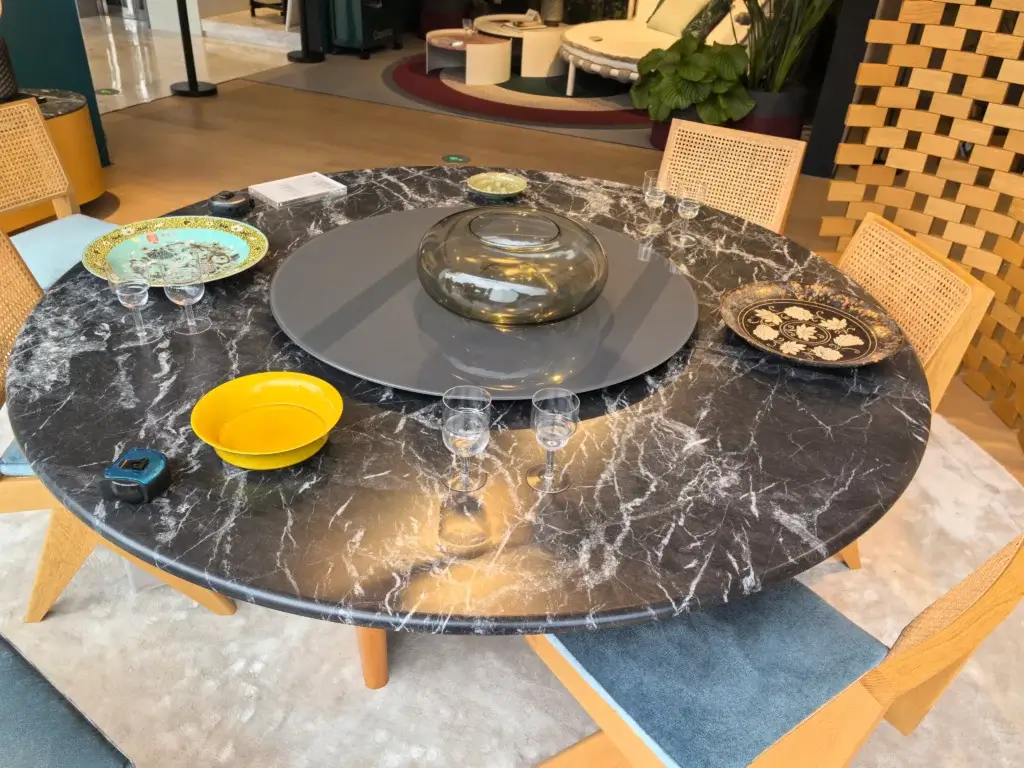
This is the most demanding application. Kitchen counters see heat, acids (lemon, vinegar, tomato), oils, and heavy use. Not every marble is suited for this. Darker marbles (like Nero Marquina) hide stains better than white marbles (like Carrara or Calacatta). A honed or brushed finish is more forgiving than polished.
For kitchen use, marble slabs for kitchen counters should be 3 cm thick for durability. Thinner slabs (2 cm) need a plywood substrate or they can crack under heavy pots. Sealing is non-negotiable—every six to twelve months, depending on use.
Bathroom Vanities and Shower Walls
Marble is more at home in bathrooms. Lower risk of acidic spills. Lower impact risk. For vanities, either 2 cm or 3 cm works. For shower walls, 2 cm is standard and lighter to install.
Marble slabs for shower need to be sealed properly—shower walls get constant moisture, and marble is porous. Without sealing, water can penetrate and cause dark spots or, over time, mold near the base. A honed finish is popular for showers because it’s less slippery than polished when wet.
Flooring
Marble flooring needs thickness. 3 cm is typical, though 2 cm can work with a proper subfloor and thicker mortar bed. The bigger concern is slip resistance. Polished marble floors are dangerously slippery when wet. Honed or tumbled finishes are safer for bathrooms, entryways, or any area that might get wet.
Fireplace Surrounds and Feature Walls
This is where marble shines. No impact concerns, no spills, no heavy use. Polished marble looks dramatic around a fireplace. The veining becomes a focal point. For feature walls, bookmatching (mirroring two slabs side by side) creates a striking pattern. That requires larger slabs—sometimes full-height 10-foot pieces.

Edge Profiles and Fabrication Details
The slab itself is one thing. The edge profile is another. A straight polished edge looks different from a beveled or ogee edge. Here’s what’s common:
• Straight/eased: Simple, modern, minimal. A slight rounding of the sharp edge.
• Beveled: A 45-degree angle cut along the top edge. Adds detail without being ornate.
• Bullnose: Fully rounded edge. Soft, traditional look.
• Ogee: An S-shaped curve. Ornate, formal, traditional.
• Mitered: Two pieces joined at a 45-degree angle to create a thicker visual edge (often used to make 2 cm slabs look like 4 cm).
Custom edges add cost—more fabrication time, more skill required. But they change the whole feel of a countertop.
Sealing and Maintenance Expectations
This is where expectations need to be set honestly. Marble is not granite. It’s softer. It etches. It stains if left unsealed.
Sealing Frequency
A properly sealed marble slab resists stains. But sealer wears off over time. For countertops, sealing every 6–12 months is typical. For low-use vanities or walls, once a year or even every two years might be enough.
The water test: splash a few drops of water on the surface. If it beads up, the sealer is still working. If it soaks in and darkens the stone, it’s time to reseal.
Daily Care
Things that are fine: mild soap and water, soft cloths, wiping spills quickly. Things that are not fine: vinegar-based cleaners, bleach, abrasive pads, leaving wine or citrus juice sitting overnight.
A common observation: people who love marble learn to live with a patina. Small etches and scratches become part of the character. People who want a perfect, unchanging surface usually end up with quartz instead. Different products for different priorities.
Sourcing Custom Marble Slabs
Not all marble is created equal. Carrara from Italy is different from Calacatta (also Italy, but rarer and more expensive). Danby from Vermont is whiter and denser. Crema Marfil from Spain is beige and more consistent.
Grade and Quality
Marble is graded by how many fissures, pits, and repairs are present. First-choice material has minimal natural defects. Second-choice might have more fissures or require more filling. The difference in price can be significant—30–50% or more.
Custom custom marble slabs are typically first-choice because they’re being selected for a visible application. But it’s worth asking what grade is being quoted.
Lead Times
Imported marble (Italy, Spain, Turkey) typically takes 4–8 weeks from order to delivery at a distributor. Domestic marble (Vermont, Georgia, Tennessee) might be faster. For projects on a tight schedule, confirming stock availability before designing around a specific stone is wise.
FAQ
How thick should custom marble slabs be for kitchen countertops?
3 cm (about 1¼ inches) is standard. It provides enough strength for overhangs and resists cracking. Thinner 2 cm slabs can work with a plywood substrate but are more common for bathroom vanities or wall cladding.
What's the best finish for a busy kitchen?
A honed or brushed finish hides etches and scratches better than polished. Darker marbles also show less wear than white or light gray varieties. Regular sealing is still required.
Can marble slabs be used for outdoor applications?
Generally not recommended. Marble is porous and susceptible to freeze-thaw damage in cold climates. It also weathers poorly in direct sun and acid rain. Granite or porcelain are better outdoor choices.