Picking out stone for a renovation feels a bit like falling in love, doesn’t it? You walk into a stone yard, surrounded by towering blocks of granite and quartzite, but then you see it. That quiet, elegant sophistication of a grey marble slab. It stands out because it isn’t trying too hard. It’s not as stark as absolute black, and it’s certainly more forgiving than the pristine (and frankly, high-maintenance) white marbles that everyone seems to have.
But here is the thing about grey marble—it is tricky. Deceptively so.
When you start looking closely, you realize that “grey” isn’t really a color; it’s a whole spectrum of moods. Choosing the right one isn’t just about pointing at a rock and saying, “I want that one.” It is about understanding how that specific piece of earth is going to live in your house, how it reacts to your lighting, and honestly, how much work you are willing to put into keeping it looking nice. It’s a process.

Understanding the Undertones (Because Grey is Never Just Grey)
If there is one place where people mess up, it’s usually here. You might think you are looking at a neutral grey marble slab, but put it next to your oak cabinets or your beige walls, and suddenly it looks blue. Or green. Or even a weird shade of purple.
Natural stone has undertones that are forged over millions of years (geology is wild, right?).
Warm vs. Cool Greys
You generally have two camps here. You have the cool greys—think Tundra Grey or some cuts of Carrara that lean heavily into blue-ish veins. These look crisp, modern, and very clean. They work amazing with chrome fixtures and bright white cabinets.
Then you have the warm greys. These are the ones with hints of brown, beige, or gold running through them. A Silver Shadow marble sometimes picks up these warmer, earthy notes. If you are going for a cozy, rustic vibe, or if you have gold hardware, you really need to lean toward a warmer grey marble slab. Mixing a cool, icy blue slab with warm, honey-colored wood floors usually creates a visual clash that feels “off,” even if you can’t immediately figure out why.
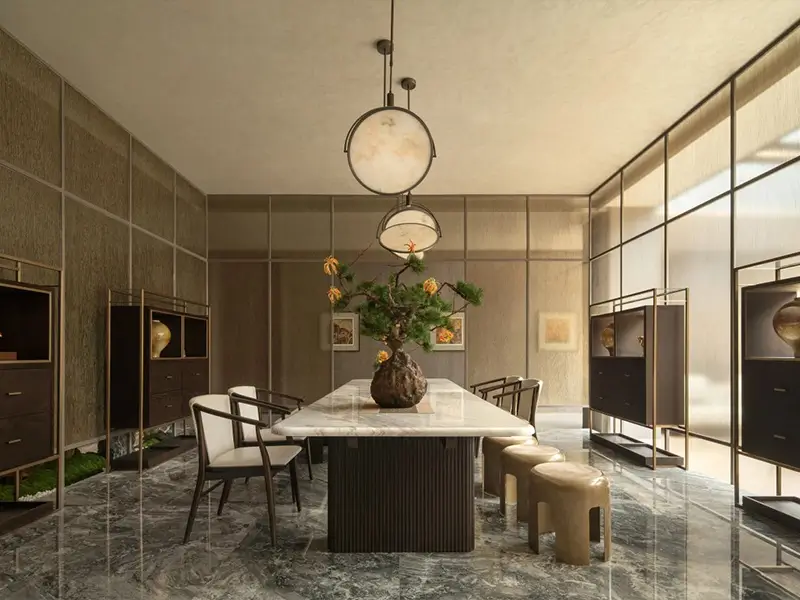
The Personality of the Veining
You aren’t buying marble for it to look consistent. If you wanted consistent, you’d buy quartz (which is fine, but it’s not the same magic). You buy marble for the movement.
When selecting a slab, you have to look at the “activity” on the surface. Some people love the chaotic energy of a stone like Invisible Grey, which looks like shattered glass or a spiderweb frozen in time. It’s dramatic. It’s a statement. You put that on an island, and nobody looks at anything else in the kitchen.
But then, sometimes that is too much. Sometimes you just want a background player.
Soft and Misty: Stones like Bardiglio often have a cloudy, misty appearance. The veins are there, but they are blurred, creating a soft focus effect.
Linear Striations: Some grey marbles are cut in a way that the veins run in straight, parallel lines (vein-cut). It looks very architectural, almost like wood grain made of stone.
Brecciated: This is when the stone looks like it was broken and glued back together with minerals. It’s chunky and organic.
It really comes down to the size of the room. A massive, busy pattern in a tiny bathroom can feel claustrophobic. But a quiet, subtle grey marble slab in a massive great room might just disappear and look like concrete. You have to find the balance.
Let’s Talk About Finishes
The surface finish actually changes the color of the stone. It’s weird, but true. A polished finish tends to deepen the color, making the greys darker and the blacks more intense. It pops. But a honed finish (matte) makes everything lighter, softer, and a bit more muted.
Here is a quick breakdown of what you might expect from different finishes on the same type of stone:
| Feature | Polished Finish | Honed Finish | Leathered / Brushed |
|---|---|---|---|
| Appearance | Shiny, reflective, high contrast. Colors look deeper. | Matte, satin-like feel. Colors look lighter / softer. | Textured, rougher feel. Enhances the natural characteristics. |
| Touch | Smooth and cold glass-like feel. | Velvety and smooth. | Tactile, you can feel the veins and ridges. |
| Scratch Visibility | Scratches show up easily against the shine. | Hides minor scratches relatively well. | Hides scratches and fingerprints the best. |
| Vibe | Luxury, classic, high-end hotel. | Modern, relaxed, organic. | Rustic, industrial, tactile. |
The Practical Side of the Finish
From an observational perspective, honed grey marble seems to be the sweet spot for kitchens lately. Because grey hides dust better than black, and honed hides etching (those dull spots from acid) better than polished, a honed grey marble slab is arguably one of the most forgiving natural stones you can pick. It’s not bulletproof—it’s still marble—but it’s easier to live with than a polished black marble that shows every single fingerprint.
Inspecting the Slab in Person (Do Not Skip This)
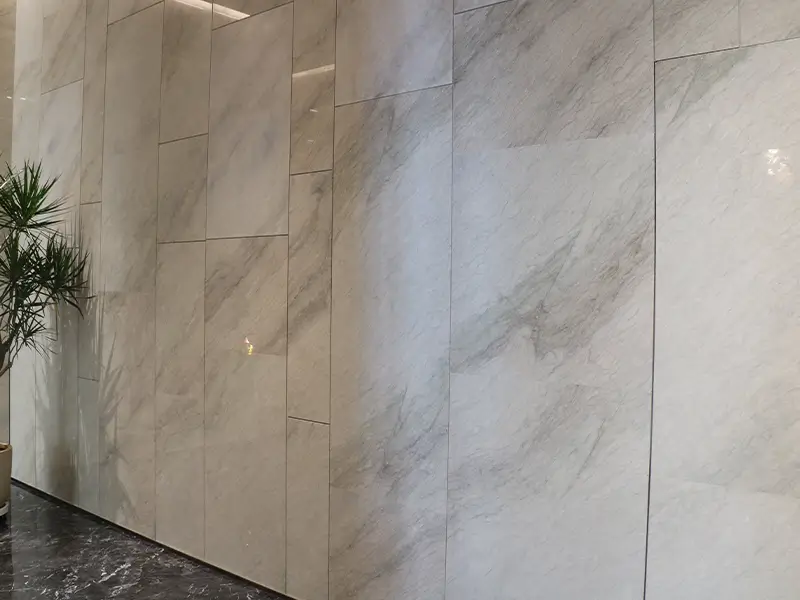
Buying stone off a sample is a recipe for disaster. The sample is like a wallet-sized photo of a person; the slab is the person standing in front of you. They might look totally different.
When you go to the warehouse to pick your grey marble slab, don’t just look at it while it’s stacked against a hundred others in the dark. Ask them to move it.
Lighting Changes Everything
Warehouses have terrible, industrial fluorescent lighting. It casts a yellow or green tint on everything. If you can, ask the crew to move the slab near a door where there is natural daylight. You need to see how the grey looks in the sun. Does it turn purple? Does a hidden vein of rust-orange pop out that you didn’t see before?
Also, check for “fissures” versus “cracks.” Fissures are natural features where the stone breathed millions of years ago. You can feel them with your fingernail sometimes, but they aren’t structural defects. Cracks are… well, cracks. If you can catch your fingernail in it and it looks like it goes all the way through, you might want to pick a different block.
Ask About the Resin
Many grey marbles are treated with resin at the factory to fill in tiny pits and strengthen the stone. This is normal standard practice. However, you want to check if the resin matches the stone well. Sometimes, over time, cheap resin can yellow, and seeing yellow spots on a cool grey marble slab is heartbreaking. Just ask the marble supplier about the processing quality.
Durability and the "Patina" Mindset
Look, we have to be real about this. It is marble. It is Calcium Carbonate. If you leave a cut lemon on it overnight, you are going to have a dull mark. If you spill red wine and ignore it, it might stain.
Choosing the right slab is also about choosing your mindset. If you are the type of person who needs your kitchen to look brand new ten years from now, maybe look at grey quartzite or porcelain instead. But there is a romance to marble (I know, sounds cheesy). It develops a patina. The edges get a little worn. The surface tells the story of the dinners cooked and the glasses raised.
A grey marble slab handles this aging process gracefully. Because of the color variation and the natural patterns, the imperfections blend in better than they do on pure white stone. It feels lived-in, rather than ruined.
Conclusion
At the end of the day, choose the stone that you can’t stop thinking about. You know the one. You walked past it, looked at three others, and then went back to it.
Design rules about cool tones and warm tones are helpful guiderails, but they aren’t laws. Sometimes a weird, contrasting mix works just because you love it. Just make sure you know what you are buying. touch the stone, see it in the light, and imagine it with your coffee cup sitting on it on a Tuesday morning. If that image makes you happy, then you’ve found the right one.
FAQ
Is a grey marble slab harder to keep clean than white marble?
From what I’ve seen, it’s actually a bit easier—at least visually. Physically, the stone has the same porosity, so you still have to seal it. But practically? A white countertop shows every single crumb, hair, and speck of dust. A patterned grey marble slab is much more forgiving with daily mess. However, if you pick a very dark grey (almost charcoal), just know that water spots and soap scum might show up as a white haze, which can be annoying in a bathroom if you aren’t wiping it down constantly.
Why does the sample look different from the full slab?
This happens all the time and it is frustrating. Stone is natural, and a 4-inch sample is just a tiny snapshot of a mountain. The quarry might have hit a section with more white veins or a darker background since that sample was cut. That is why you can’t just order from a catalog; you really need to approve the specific grey marble slab yourself before they cut it. It’s the only way to avoid a surprise on installation day.
Is grey marble expensive compared to granite?
It usually sits somewhere in the middle. It’s generally pricier than your basic speckled granites or entry-level quartz, but it is often more affordable than the high-end boutique white marbles like Calacatta Gold. Prices fluctuate a lot depending on where the stone was quarried (Italy vs. Turkey, for example) and how “clean” the veining is. You can usually find a decent grey marble slab to fit a mid-range budget if you aren’t too fixated on a specific brand name.