Why Selecting Quality Marble Slabs Matters for Business Success
Natural stone remains one of those materials that clients never stop requesting. The appeal crosses industries—from hospitality to residential construction, from retail displays to high-end restaurants. Marble slabs specifically carry associations with luxury, permanence, and craftsmanship that manufactured alternatives simply cannot replicate.
For businesses dealing in stone fabrication, interior design, or construction, marble selection directly impacts profitability. Choose poorly and projects suffer from cracking, staining, or client dissatisfaction. Choose wisely and repeat business follows naturally. The difference often comes down to understanding what separates exceptional marble from mediocre material.
Sourcing decisions made today affect projects months or even years into the future. Building relationships with reliable suppliers, understanding grading systems, and recognizing quality indicators—these skills separate thriving stone businesses from those constantly fighting problems.
Understanding Marble Slabs Grades and Classifications
Commercial Grading Systems
The marble industry uses grading systems that vary somewhat between regions and suppliers. Generally speaking though, most follow similar patterns:
| Grade | Characteristics | Typical Applications |
|---|---|---|
| A Grade | Uniform coloring, minimal veining variation, few natural fissures | High-end residential, luxury hospitality |
| B Grade | Moderate veining, some color variation, minor fissures acceptable | Commercial projects, mid-range residential |
| C Grade | Significant variation, visible fissures requiring filling, natural imperfections | Budget projects, accent pieces, outdoor use |
| D Grade | Heavy veining, multiple fissures, requires substantial reinforcement | Specialty applications, artistic installations |
These grades don’t necessarily indicate beauty—some designers specifically seek heavily veined C or D grade material for dramatic effect. But grades do indicate consistency and workability, which matter enormously for commercial applications.
Origin and Quality Correlations
Where marble originates influences its characteristics substantially. Italian Carrara remains the benchmark many buyers reference, though excellent marble slabs come from quarries worldwide. Turkish, Greek, Spanish, Chinese, and Indian sources all produce quality material—and plenty of substandard stone too.
Origin alone doesn’t guarantee quality. Within any quarry, material varies block to block. Experienced buyers learn to evaluate individual slabs rather than assuming geographic origin ensures consistent results.
Key Selection Criteria for Marble Slabs Procurement
Visual Inspection Essentials
Examining marble slabs before purchase prevents expensive surprises later. Critical inspection points include:
• Surface consistency across the entire slab
• Backside condition revealing hidden cracks or weak areas
• Edge integrity without chips or structural concerns
• Color accuracy matching samples or previous purchases
• Vein pattern flow for bookmatching potential
Natural variations exist in all marble—that’s part of its appeal actually. But distinguishing acceptable natural variation from problematic defects requires trained observation.
Structural Integrity Assessment
Beyond aesthetics, structural soundness determines whether marble slabs perform adequately in demanding applications. Factors worth evaluating:
1. Thickness consistency throughout the slab
2. Absence of hairline cracks that worsen during fabrication
3. Appropriate density for intended use
4. Fissure filling quality where applicable
5. Mesh backing condition on reinforced slabs
Slabs failing structural assessment may work fine for wall cladding but prove disastrous as countertop material. Application requirements should drive acceptance criteria.
Finish Types and Their Applications
Surface finishing affects both appearance and practical performance of marble slabs. Common options include:
• Polished: High gloss, reveals maximum color depth, shows wear patterns readily
• Honed: Matte finish, more forgiving of surface marks, popular for flooring
• Leathered: Textured surface hiding imperfections, contemporary aesthetic
• Brushed: Antique appearance, excellent grip characteristics, rustic applications
Matching finish selection to end-use requirements avoids client disappointment and reduces callback frequency.
Sourcing Strategies for Marble Slabs Businesses
Direct Quarry Relationships
Establishing direct quarry connections offers pricing advantages and selection priority. However, this approach demands sufficient volume to justify logistics complexity. Smaller operations often find quarry-direct purchasing impractical despite theoretical cost savings.
Container minimums, international shipping complications, and quality control challenges at distance—these realities limit direct sourcing feasibility for many businesses.
Working with Distributors
Distributors serve important functions beyond simple markup. Quality distributors inspect incoming material, reject substandard slabs, maintain climate-controlled inventory, and provide convenient local access. The premium charged reflects genuine value for businesses lacking infrastructure to handle direct imports.
Finding distributors who understand specific business needs takes time. Some specialize in exotic varieties while others focus on volume commercial material. Alignment matters.
Evaluating Supplier Reliability
Long-term supplier relationships matter more than chasing lowest prices. Reliable marble slabs suppliers demonstrate:
1. Consistent quality across multiple orders
2. Transparent grading and honest defect disclosure
3. Reasonable return policies for legitimate concerns
4. Inventory depth supporting project continuity
5. Technical knowledge assisting with selection decisions
Switching suppliers constantly based on price fluctuations ultimately costs more through quality inconsistencies and relationship rebuilding.
Cost Considerations and Budget Planning
Price Variables Beyond Grade
Material costs for marble slabs depend on numerous factors beyond simple grading:
• Slab dimensions affecting yield percentages
• Rarity of specific colors or patterns
• Current quarry production levels
• Transportation distances and fuel costs
• Currency fluctuations for imported material
• Seasonal demand pattern
Understanding these variables helps predict pricing trends and time purchases advantageously. Buying during low-demand periods sometimes yields meaningful savings.
Calculating True Project Costs
Raw slab pricing tells only part of the story. Accurate project costing must account for fabrication waste, potential breakage, sealing requirements, and installation complexity. Some visually stunning marble slabs prove cost-prohibitive once full project expenses get calculated.
If you want to know more about marble slabs, please read Marble Slabs in 2026:A Complete Guide.
FAQ
How much variation between marble slabs is normal?
Natural stone inherently varies. Even slabs from identical blocks show differences in veining and color intensity. Expecting perfect consistency contradicts marble’s fundamental nature. However, dramatic variations within single slabs—rather than between slabs—often indicate quality problems worth investigating before purchase.
What thickness works best for commercial countertop applications?
Standard countertop thickness runs 2cm or 3cm depending on design preferences and structural requirements. Thicker 3cm marble slabs provide better durability and simplified edge treatment options. The 2cm material requires buildup strips for certain edge profiles but costs less and weighs considerably lighter for installation purposes.
How should businesses store marble slabs before fabrication?
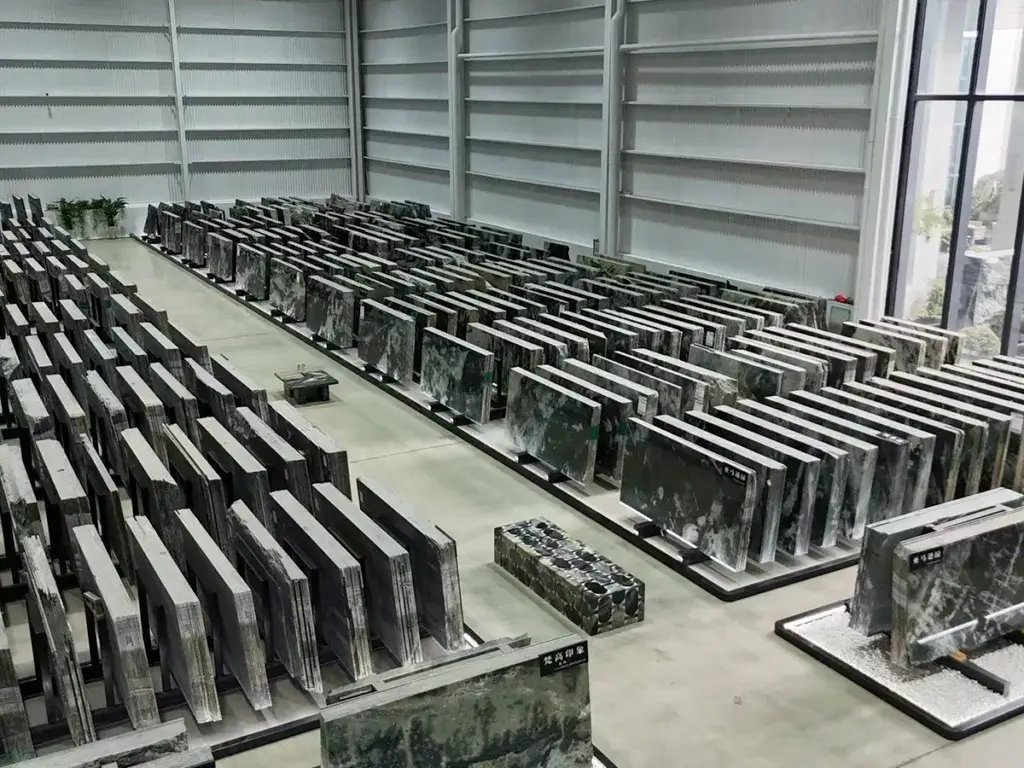
Proper storage prevents damage and staining before slabs reach fabrication. Vertical A-frame storage works well, keeping slabs upright with protective padding between pieces. Indoor climate-controlled environments prevent moisture absorption problems. Slabs should never rest directly on concrete floors or contact dissimilar metals that cause staining.