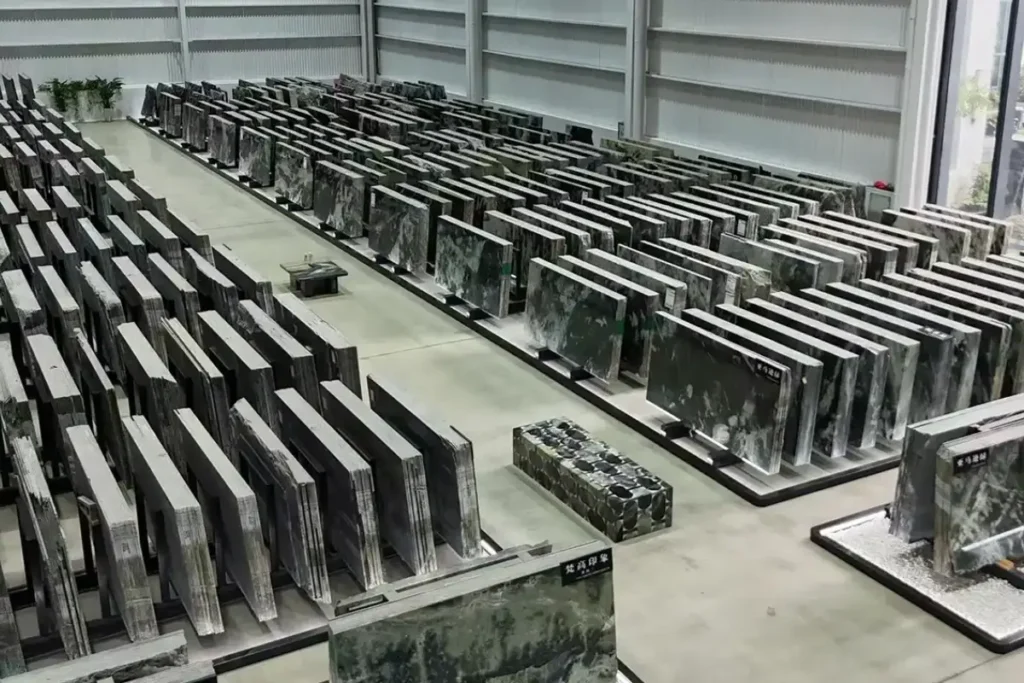
There is something almost intimidating about walking into a stone yard for the first time. Rows of massive marble panels leaning against steel racks, each one taller than a person and heavier than a small car. It raises an obvious question that surprisingly few people think to ask before starting a renovation project: just how big are marble slabs, anyway? The answer is not quite as straightforward as it might seem, because marble slab sizes vary considerably depending on a whole range of factors—from quarry location to processing equipment to the natural characteristics of the stone itself.
Getting a handle on these dimensions early in the planning process can prevent headaches later. Nothing derails a kitchen renovation faster than discovering the slab is too short for a seamless countertop, or that a gorgeous piece of Calacatta simply will not fit through the front door. These things happen. Understanding standard sizing conventions makes them far less likely.
Why Marble Slab Sizes Vary So Much
Unlike manufactured materials that come off assembly lines in perfectly uniform dimensions, marble is a natural product. It forms deep underground over geological timescales, and no two blocks extracted from a quarry are exactly identical. When those blocks get sliced into slabs, the final dimensions depend on several interrelated factors.
The Quarry Factor
Different quarries yield different block sizes. Italian quarries—Carrara being the most famous—tend to produce moderately sized blocks, partly because of the mountain terrain and partly because of longstanding extraction methods. Brazilian and Turkish quarries, on the other hand, sometimes yield genuinely enormous blocks thanks to different geological conditions and more mechanized extraction processes.
This matters because the original block size directly limits how big the resulting slabs can be. A small block simply cannot produce a jumbo slab, no matter how sophisticated the cutting equipment.
Processing and Cutting Technology
Once a block reaches a processing facility, it gets sliced into individual slabs using gang saws, wire saws, or a combination of both. The specific equipment available affects maximum slab dimensions. Older facilities might max out at smaller cuts, while modern plants equipped with larger saw frames can handle bigger blocks and produce correspondingly larger slabs.
Natural Imperfections
Marble is full of veining, which is part of its beauty. But sometimes those veins represent structural weaknesses—planes along which the stone might crack under stress. Processors have to work around these features, which occasionally means cutting a potentially large slab into smaller pieces to avoid defects. It is frustrating when it happens, but preferable to a slab cracking during fabrication or installation.
Standard Marble Slab Sizes in the Industry
Despite all the variability, the stone industry has developed some widely recognized size ranges. These are not absolute standards in the way that lumber dimensions or plywood sheets are standardized, but they represent what most suppliers stock and what most fabricators expect to work with.
Quick Reference Table for Common Dimensions
| Slab Type | Length Range | Width Range | Typical Thickness |
|---|---|---|---|
| Standard Slab | 96 – 110 inches | 54 – 65 inches | 2 cm (3/4 inch) |
| Jumbo Slab | 120 – 145 inches | 72 – 86 inches | 2 cm or 3 cm |
| Cutter / Half Slab | 55 – 78 inches | 26 – 42 inches | 2 cm |
| Pre-cut Tiles | 12 – 24 inches | 12 – 24 inches | 1 cm (3/8 inch) |
A few notes on this table: standard slabs are by far the most commonly available and work for the vast majority of residential applications. Jumbo slabs have become increasingly popular for high-end kitchens and commercial installations where a seamless appearance is critical. Cutter slabs—basically half-sized pieces—are useful for smaller projects like bathroom vanities or fireplace surrounds.
It bears repeating that these are approximate ranges. Actual marble slab sizes at any given supplier will vary by a few inches in either direction. Always verify actual measurements before committing to a purchase, especially for projects where precise dimensions matter.

Understanding Thickness Options
Marble slab sizes are not just about length and width. Thickness plays an important role in both aesthetics and structural performance, and the choice often depends on the specific application.
The most common thickness options include:
2 cm (approximately 3/4 inch): This is the standard for many applications. It is lighter, more affordable, and works well for countertops when installed over a plywood substrate for added support.
3 cm (approximately 1 1/4 inches): The preferred choice for kitchen countertops in most high-end projects. Thicker slabs can span cabinet gaps without requiring plywood backing and feel more substantial overall. They also resist chipping along edges better than thinner alternatives.
1 cm (approximately 3/8 inch): Primarily used for wall cladding, furniture applications, or situations where weight is a critical concern. These thin slabs are almost always backed with fiberglass mesh or honeycomb aluminum panels to prevent breakage.
Choosing the right thickness is partly about structural requirements and partly about the visual look desired. A 3 cm edge on a kitchen island just has a different presence than a 2 cm edge, even if both function perfectly well.
Matching Marble Slab Sizes to Project Needs
Different applications of marble slabs call for different approaches to sizing. What works for a bathroom vanity would be completely wrong for a large kitchen island, and vice versa.
Kitchens are where slab sizing becomes genuinely critical. Standard countertop depth runs around 25 to 26 inches, which fits comfortably within the width of most slabs. Length is the trickier dimension.
For countertops longer than about eight feet, the options are:
Sourcing a jumbo slab that covers the entire run without seams.
Using two standard slabs with a carefully positioned seam—ideally behind the sink or at an inside corner where it will be less visible.
Redesigning the layout slightly to accommodate available slab dimensions.
Waterfall edges, where the marble continues down the side of an island, consume significant additional material. This needs to be accounted for when calculating how much slab area is actually required.
Bathrooms typically require much smaller pieces. A standard vanity top might only be 48 to 60 inches long and 22 inches deep. In these cases, buying a full-size slab makes little sense. Cutter slabs or remnants—leftover pieces from larger projects—often work perfectly and cost considerably less.
Table and Chair Applications
Marble tabletops and chair bases can utilize either full slabs or pre-cut pieces, depending on the desired aesthetic and budget. Large-format sections (24×24 inches, for example) have become popular because they offer a clean, modern look with relatively straightforward fabrication. Full-slab tabletops are stunning but expensive and require meticulous substrate preparation.
Considerations for tables and chairs include:
• Pre-cut pieces are easier to replace if damaged.
• Larger components mean fewer seams, which some find more visually appealing.
• Thinner material (1 cm) is standard for tabletops and works fine over proper support structures.
Wall Cladding and Feature Panel
Walls offer more flexibility since they do not bear weight in the same way as countertops or floors. Thin slabs backed with honeycomb panels can cover large vertical surfaces without overloading the structure. Bookmatching—installing two adjacent slabs so their veining mirrors each other—creates dramatic effects and works best when the marble slab sizes are large enough to fill a significant portion of the wall.

Practical Tips Before Buying
A few things worth keeping in mind when shopping for marble:
Measure everything twice. Actually, three times. Include allowances for sink cutouts, edge treatments, and fabrication tolerances.
View slabs in person when possible. Photographs rarely capture true color or veining accurately, and lighting conditions in showrooms versus actual installation spaces can differ dramatically.
Ask about the specific slab, not just the type. Marble varies piece to piece. Selecting the actual slab that will be used in the project avoids unpleasant surprises.
Factor in waste. Between cutouts, edge shaping, and the irregular shapes of some slabs, expect to lose 15 to 25 percent of the material to waste during fabrication.
Understanding marble slab sizes before diving into a project makes the entire process smoother. There is less guesswork, fewer miscommunications with fabricators, and a much lower chance of discovering—at the worst possible moment—that the beautiful slab selected simply will not work for the intended application.
More information:
Marble Slab Sizes Explained: How to Choose the Right Dimensions
FAQ
What is the standard size of a marble slab?
Most standard marble slabs measure approximately 96-110 inches long by 54-65 inches wide, with 2 cm or 3 cm thickness.
How much does a full marble slab weigh?
A typical 2 cm standard slab weighs between 450-600 pounds. Jumbo slabs or 3 cm thickness can exceed 900 pounds.
Can marble slabs be cut to custom sizes?
Yes, fabricators routinely cut slabs to specific project dimensions. The slab just needs to be large enough to accommodate the required piece plus cutting allowances.