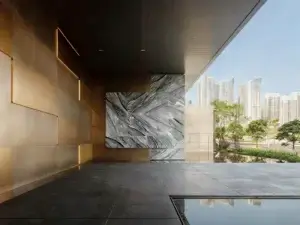
Natural stone never really goes out of style. But the way people use it, source it, and think about it keeps evolving. Marble slabs remain among the most sought-after materials for high-end residential and commercial projects heading into 2026. The market has shifted in interesting ways though—pricing structures, popular varieties, sustainability concerns, and design preferences all look different than they did even a few years back.
This guide covers what actually matters when considering marble slabs today. Not just the pretty pictures and vague promises, but the practical details that affect real purchasing decisions and long-term satisfaction.
Understanding Marble Slabs: The Basics Worth Knowing
Marble forms when limestone undergoes metamorphosis under heat and pressure. That geological process creates the crystalline structure and distinctive veining patterns that make each slab unique. No two pieces are identical—ever. This natural variation represents both marble’s greatest appeal and its biggest challenge for designers seeking consistency.
The term “marble slabs” refers to large format pieces typically cut from quarried blocks. Standard dimensions vary by supplier and origin, but common sizes include:
120″ x 60″ (approximately 3m x 1.5m)
110″ x 70″ (approximately 2.8m x 1.8m)
Custom sizes from block inventory
Thickness options generally range from 2cm (about ¾ inch) for wall applications to 3cm (about 1¼ inches) for countertops and heavy-use surfaces. Thicker slabs cost more but provide greater durability and allow more substantial edge profiles.
The quality grading system causes confusion for many buyers. Commercial grade, standard grade, premium grade—these classifications lack universal definitions. What one supplier calls premium another might label standard. Examining actual slabs matters far more than trusting grade labels.
Popular Marble Varieties Trending in 2026
Design preferences shift constantly. Some classics maintain popularity while others cycle in and out of fashion. The current landscape shows interesting patterns.
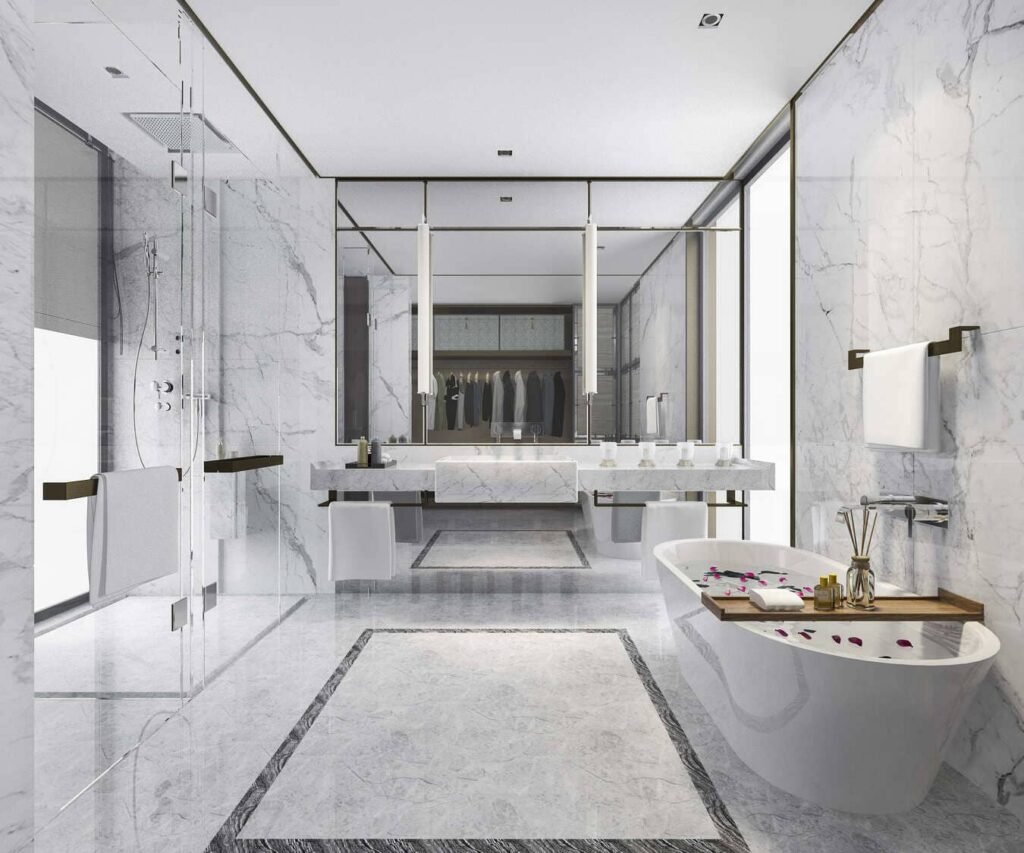
Calacatta varieties continue commanding premium prices. That bold, dramatic veining against bright white backgrounds works in both traditional and contemporary settings. Calacatta Borghini and Calacatta Viola have gained particular traction recently. Supply constraints keep prices elevated—genuine Calacatta comes only from specific Italian quarries.
Carrara remains the accessible alternative. More subtle veining, softer gray tones, and significantly lower pricing make it practical for larger installations. The material appears in countless kitchens and bathrooms precisely because it delivers marble aesthetics without Calacatta budgets.
Statuario falls somewhere between—bolder than Carrara, typically less dramatic than Calacatta. Availability fluctuates considerably.
Colored and Dramatic Varieties
Not everyone wants white. Green marbles like Verde Guatemala and Verde Alpi are seeing renewed interest. These work beautifully as accent pieces or statement features.
Black marbles—Nero Marquina particularly—provide striking contrast options. The white veining against deep black creates unmistakable visual impact.
Brown and beige varieties (Emperador, Crema Marfil) remain popular in warmer design schemes, though they’ve declined somewhat from peak popularity a decade ago.
Bookmatched and Statement Slabs
The trend toward feature walls and dramatic installations has increased demand for bookmatched marble slabs. This technique places consecutive slabs from the same block in mirror image, creating butterfly-wing patterns. The effect ranges from subtle to absolutely stunning depending on the stone’s natural veining.
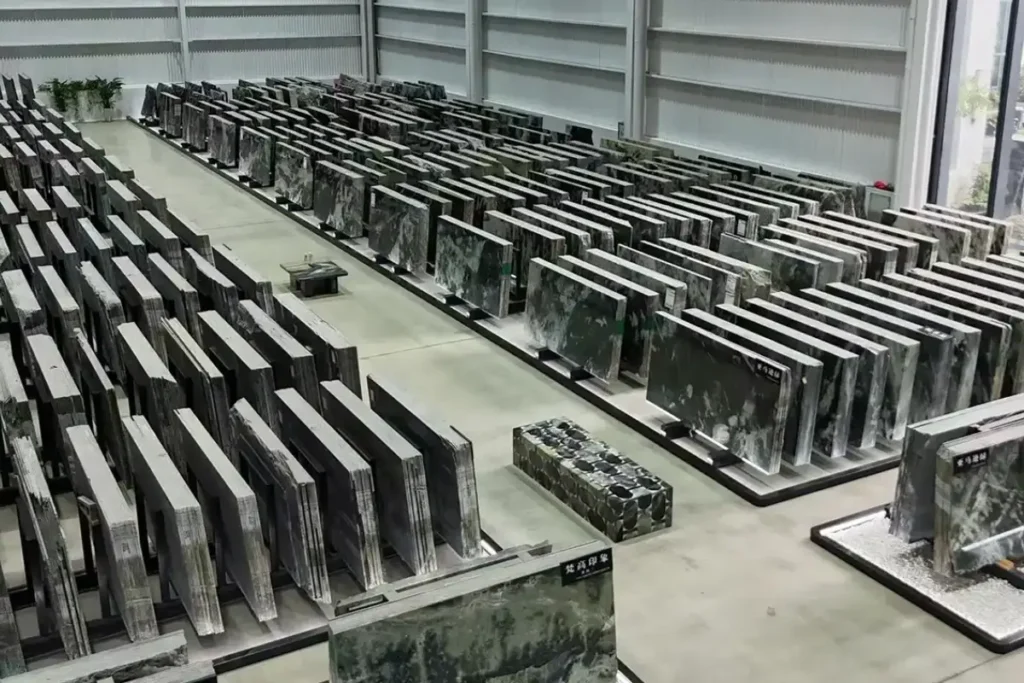
Finding suitable bookmatched pairs requires patience and usually involves selecting from slab yards in person. Photos rarely capture the full effect.
Marble Slabs Pricing in 2026
Pricing transparency has improved somewhat in recent years, though the marble industry still involves more variability than many buyers expect. Location, supplier relationships, order volume, and timing all affect final costs.
| Marble Type | Price Range (per sq ft) | Typical Applications |
|---|---|---|
| Carrara | 40–100 | Countertops, bathrooms, flooring |
| Calacatta | 180–400+ | Feature walls, luxury kitchens |
| Statuario | 150–300 | High-end residential, commercial |
| Nero Marquina | 50–120 | Accent features, flooring |
| Emperador | 35–80 | Traditional interiors, commercial |
| Verde Guatemala | 60–150 | Accent walls, furniture tops |
| Thassos (pure white) | 50–100 | Modern minimalist designs |
These figures represent material costs only. Fabrication (cutting, edging, finishing) typically adds
30−75 per square foot. Installation runs another40−100 depending on complexity and location. A modest kitchen countertop project easily reaches5,000−15,000 installed when using quality marble slabs.
Pricing has increased roughly 15-25% since 2022 for most varieties. Supply chain improvements helped stabilize some costs, but energy prices in quarrying regions and transportation expenses continue pushing numbers upward.
Sourcing and Selecting Marble Slabs
Where to Buy
Multiple sourcing channels exist, each with tradeoffs:
Local stone yards – Allows physical inspection, supports relationship building, typically limited selection
National distributors – Broader inventory, consistent pricing, may require travel to regional warehouses
Direct import – Lower per-unit costs for large orders, longer lead times, quality verification challenges
Online marketplaces – Convenient browsing, risky without physical inspection, best for standard materials
For significant projects, visiting slab yards in person remains advisable. Photographs—even good ones—miss subtle color variations, flaw locations, and overall character. The specific slab matters enormously with natural stone.
What to Look For
Inspecting marble slabs requires attention to several factors:
• Veining pattern and direction – Does it complement the intended design?
• Color consistency – Particularly important when using multiple slabs together
• Surface defects – Pits, fissures, and natural inclusions vary widely
• Structural integrity – Cracks versus natural veining (cracks feel different to fingernail test)
• Finish quality – Polished surfaces should reflect evenly without waves
• Thickness consistency – Important for countertop installations
Bringing photos of your space helps visualize how specific slabs might work. Taking your own photos under consistent lighting aids comparison between visits.
Quantity Planning
Calculating needed material involves more than simple square footage. Waste factors include:
• Cutout areas (sinks, cooktops)
• Vein matching requirements
• Edge finishing allowances
• Pattern matching for multiple pieces
• Breakage contingency
Most projects require 10-20% overage beyond measured surface area. Complex layouts or strict pattern matching may need more. Running short mid-project creates nightmare scenarios—finding matching material from the same block later is often impossible.
Installation Considerations for Marble Slabs
Professional installation is essentially mandatory for large format marble slabs. The weight alone demands specialized handling equipment. A 30 square foot countertop slab weighs 400+ pounds. Dropping it destroys both the material and the budget.
Beyond handling, proper installation requires:
Accurate templating (usually laser or digital measurement)
Precise fabrication with professional equipment
Appropriate substrate preparation
Correct adhesive selection and application
Seam placement minimizing visibility
Professional finishing and sealing
The gap between professional results and amateur attempts is vast with marble slabs. This isn’t false complexity invented to justify professional fees—the material genuinely demands expert handling.
Timeline expectations should account for:
Template creation (1-2 weeks after countertop base installation)
Fabrication (1-3 weeks depending on complexity)
Installation scheduling (varies by contractor availability)
Sealing and curing (2-3 days before full use)
Rushing any stage invites problems. Quality fabricators stay busy; waiting for good work beats settling for fast work.
Maintenance and Care for Marble Slabs
Marble’s beauty comes with responsibility. The material requires more attention than granite or engineered alternatives. Understanding this upfront prevents disappointment.
Sealing Requirements
Marble’s porosity makes sealing essential. Unsealed marble stains readily—sometimes permanently. Initial sealing should happen after installation with periodic reapplication.
Sealing frequency depends on:
Marble variety (some more porous than others)
Surface finish (polished less porous than honed)
Usage intensity
Product quality used
Most residential applications need resealing annually. High-use commercial settings may require more frequent attention. Testing with water drops indicates when resealing is needed—water should bead, not absorb.
Daily Care Practices
Protecting marble slabs requires consistent habits:
Wipe spills immediately (especially acidic substances)
Use pH-neutral cleaners specifically formulated for stone
Avoid vinegar, lemon, and common household cleaners
Place coasters under glasses
Use trivets under hot items
Apply cutting boards consistently
Etching from acidic contact causes dull spots on polished surfaces. This isn’t staining—it’s actual surface damage. Prevention works better than remediation.
Addressing Damage
Minor issues happen despite careful use. Options include:
• Light etching – Polishing compounds may restore shine
• Stains – Poultice treatments draw out many stains
• Chips – Professional repair with matching epoxy
• Scratches – Buffing or professional refinishing
• Severe damage – Section replacement or professional restoration
Living with marble means accepting some evolution over time. Minor wear develops character for some owners; others find it frustrating. Honest self-assessment about maintenance tolerance helps before committing to marble slabs.
Sustainability and Ethical Sourcing
Environmental and ethical considerations increasingly influence purchasing decisions. The marble industry has responded with varying degrees of transparency.
Quarrying impacts include habitat disruption, water usage, and energy consumption. Transportation from distant quarries adds carbon footprint. Some operations implement better practices than others—reclaiming water, using renewable energy, restoring quarry sites.
Certifications and documentation remain inconsistent industry-wide. Asking suppliers about sourcing provides some insight, though verification proves difficult. Regional stone choices reduce transportation impact when suitable options exist.
The durability argument favors marble’s sustainability profile. Properly maintained marble slabs last generations—far outlasting many alternatives that require periodic replacement. Longevity offsets initial environmental costs over extended timeframes.
FAQ
How long do marble slabs typically last?
With proper care, marble slabs last 100+ years. Many historic buildings feature original marble installations centuries old. Durability depends heavily on maintenance consistency and usage patterns.
Can marble slabs be used outdoors?
Yes, but with limitations. Freeze-thaw cycles, UV exposure, and weather affect appearance over time. Specific varieties handle outdoor conditions better than others. Sealing becomes even more critical.
Are marble slabs worth the investment compared to alternatives?
For buyers prioritizing natural beauty and long-term value, yes. Those wanting lower maintenance or tighter budgets might prefer quartz or granite. Personal priorities determine whether marble’s unique characteristics justify higher costs and care requirements.