Marble, a metamorphic rock born deep within the Earth’s crust, has captivated countless architects and artists with its rich colors and unique textures. From the pure white of China white jade to the deep, dark green of Danton Green, from the noble and elegant Carrara White to the passionate and unrestrained Rosa Coralite, marble seems like a carefully crafted palette by nature. So, where do these vibrant colors come from? This article will take you into the world of marble’s colors, unveiling the mysteries of their formation.
The Formation of Marble: Metamorphosis Under High Temperature and Pressure
To understand the colors of marble, we must first understand how marble itself is formed. Marble is a metamorphic rock formed from limestone or dolomite through regional or contact metamorphism. In this process, the original carbonate rock recrystallizes under the combined effects of high temperature (usually from magma intrusion) and high pressure (from the weight of the overlying strata or tectonic movements). Calcite or dolomite crystals regrow and interlock, forming a dense crystalline structure.
It is during this long metamorphic process that trace impurities, minerals, and organic matter in the original rock are redistributed and enriched, giving marble its vibrant colors.
The Mystery of Color: The Magic of Impurities
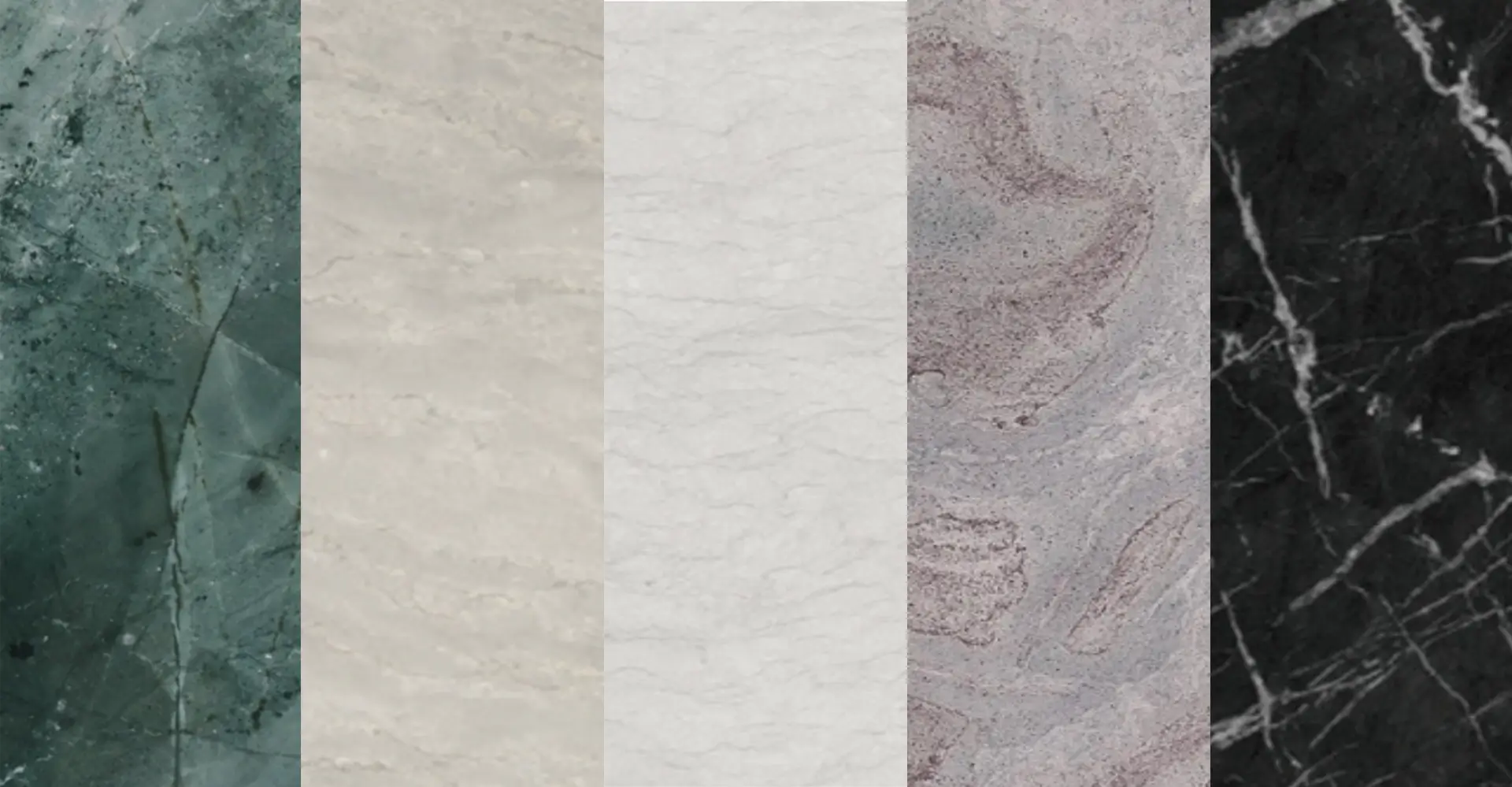
The main chemical component of pure marble is calcium carbonate (CaCO₃), which should theoretically be pure white or off-white. However, absolutely pure substances are extremely rare in nature. The myriad colors of marble are primarily due to the trace impurities and minerals it contains. These “foreign guests,” though present in extremely small amounts, act like magicians, completely altering the appearance of the marble.
White Marble: The Beauty of Purity
White marble is the purest member of the marble family, such as the famous Italian Carrara Marble and Fangshan white marble from China. Their composition is the simplest, mainly composed of calcite or dolomite, with extremely low impurity content. When the purity of calcium carbonate exceeds 99%, the rock exhibits a pure white color.
Black and Gray: The Imprint of Organic Matter
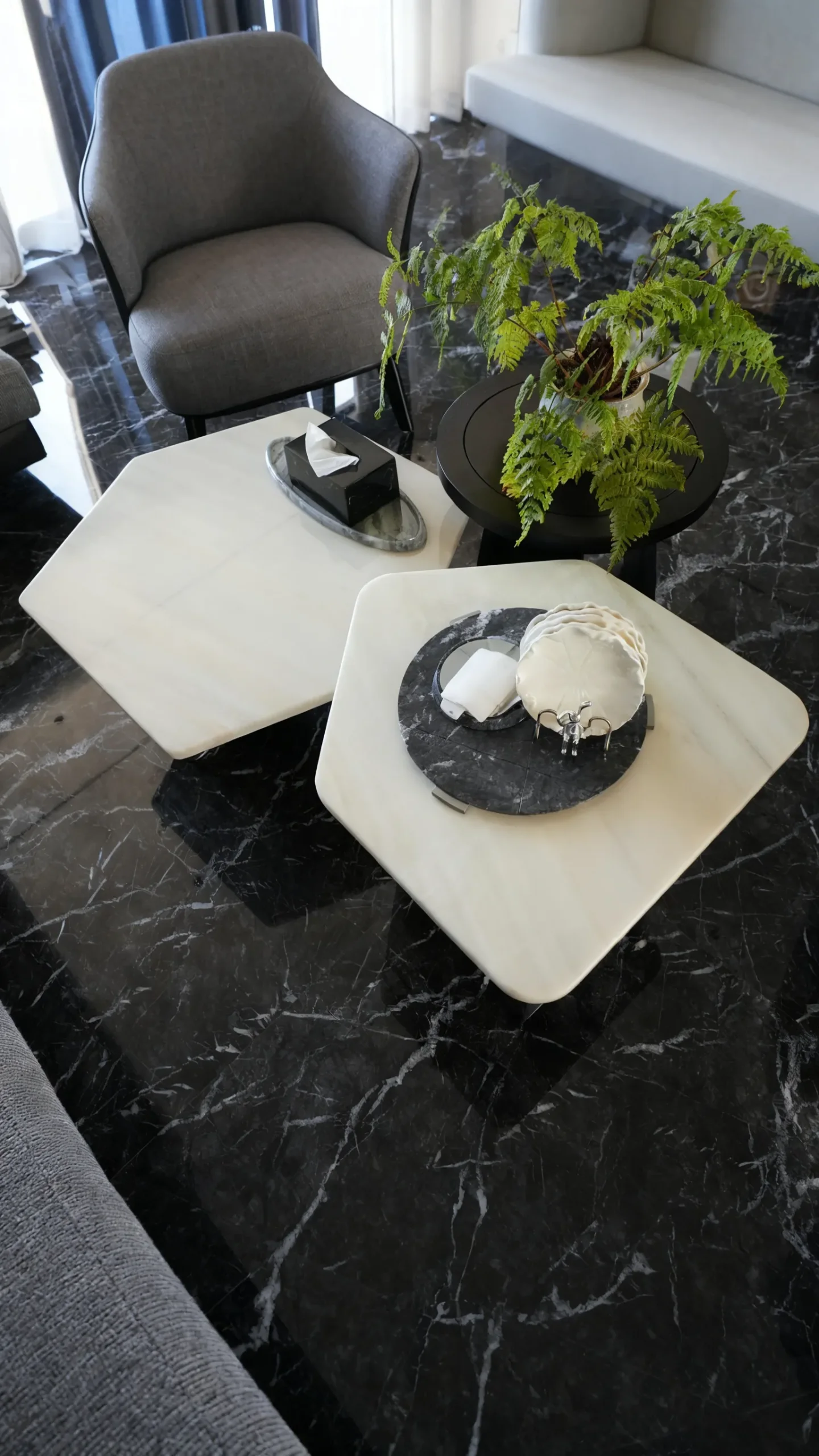
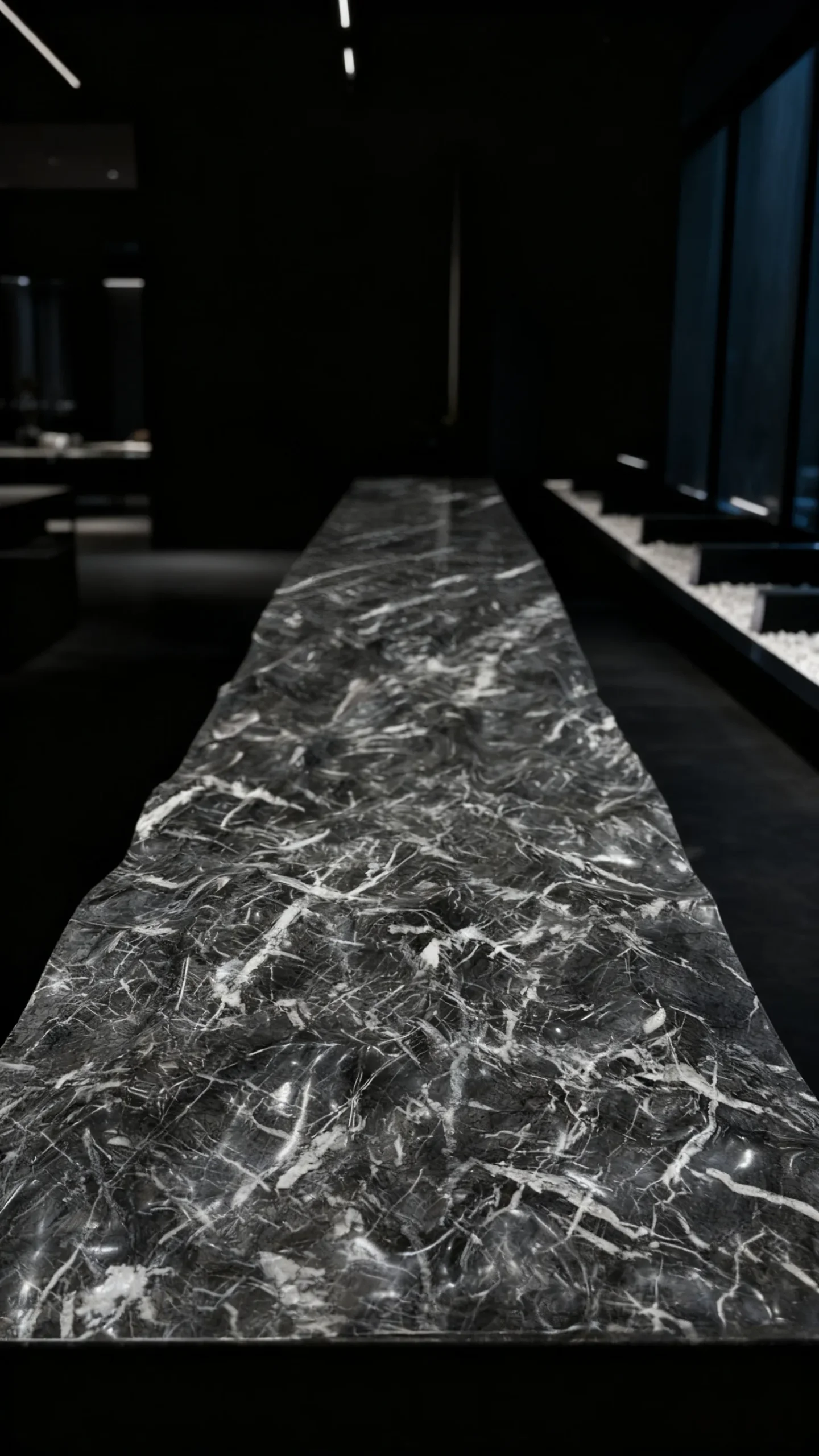
The color of marble, ranging from light gray to deep black, primarily originates from the organic matter (carbonaceous matter, bituminous matter) and associated finely dispersed sulfides (mainly iron, followed by copper, aluminum, etc.) contained within the rock. Studies show that as little as 0.05% finely dispersed organic carbon is sufficient to give limestone a gray hue. As the degree of metamorphism increases, the organic carbon content gradually decreases; when the organic carbon content drops below 0.02%, the rock transforms into pure white or off-white marble.
China’s “Guilin Black,” “Dalian Black,” and “Suzhou Black,” as well as “Moyu” from Huolu, Hebei, all belong to the black marble series. Interestingly, Guilin Black emits a distinctive odor during processing, and a thin layer of oil floats on the stone slurry, evidence of its organic matter and sulfide content.
Red, Pink, and Purple: The Coloring Effect of Iron and Manganese
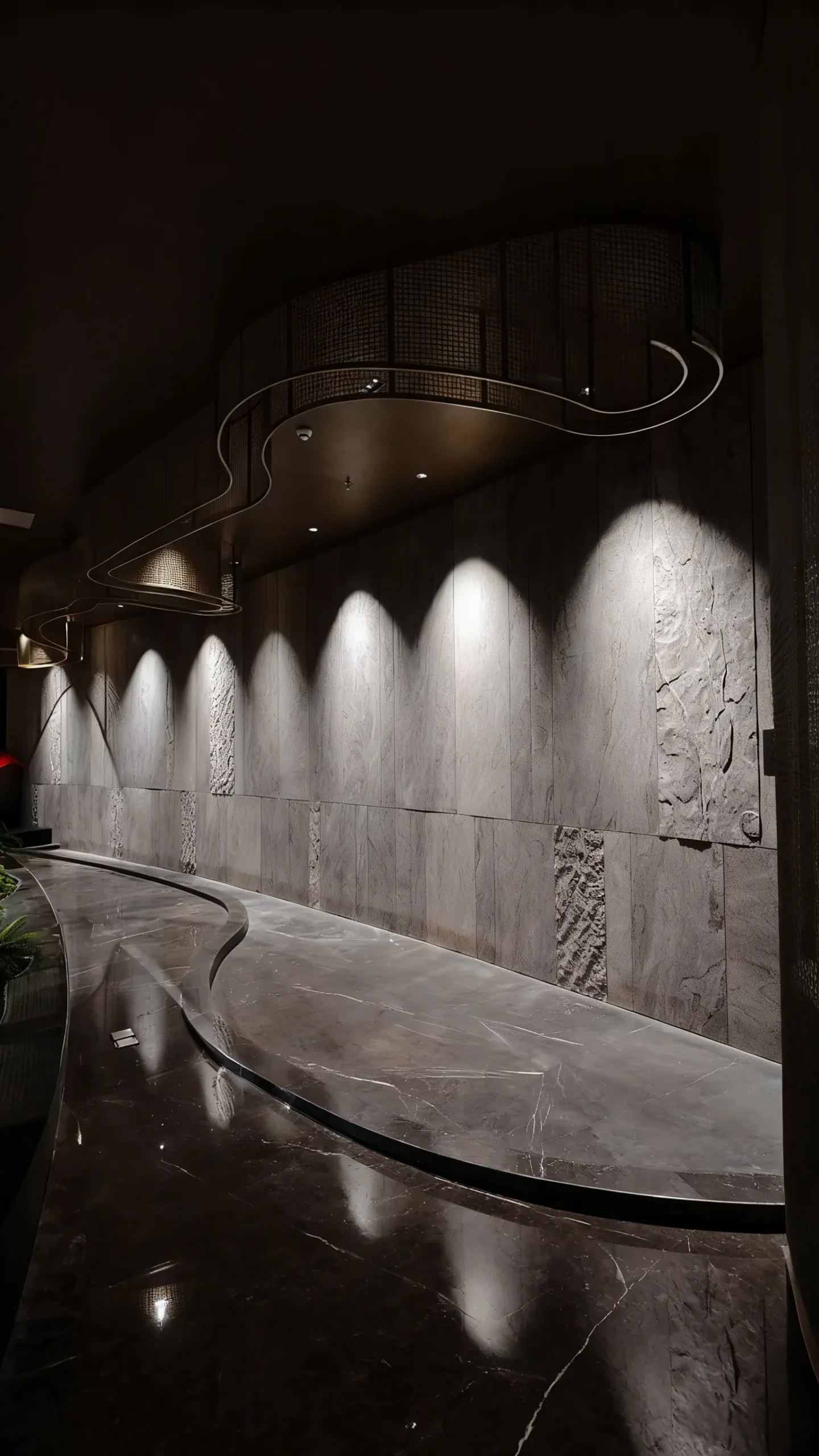
The formation of red marble is usually closely related to the oxidation state of iron. Marble exhibits red, brownish-red, reddish-brown, or yellow hues when rocks contain hydrated iron oxides—such as hematite (Fe₂O₃) and limonite. Hematite is the primary source of red pigment, formed in deep-sea sedimentary environments during early diagenesis, giving marble its rich red hue.
Purple marble is rarer, typically resulting from the coexistence of iron oxide and manganese oxide in specific proportions. The “Purple Bean” marble from Huolu County, Hebei Province, is a representative example of purple marble. The “Red Wanluo” marble from Lingbi County, Anhui Province, showcases the typical appearance of red marble.
It’s worth noting that not all marble colors are naturally occurring. Sometimes, marble can change color after installation due to external factors. For example, the Carrara white marble flooring inside the Oslo Opera House in Norway developed yellowish-brown stains shortly after installation. Research revealed that this was due to potassium and sodium components in the mortar migrating upwards with sulfur naturally present in the marble under humid conditions, eventually oxidizing and precipitating on the surface to form elemental sulfur and potassium sulfate crystals, thus causing discoloration.
Green: A Masterpiece of Low-Valence Iron and Serpentine
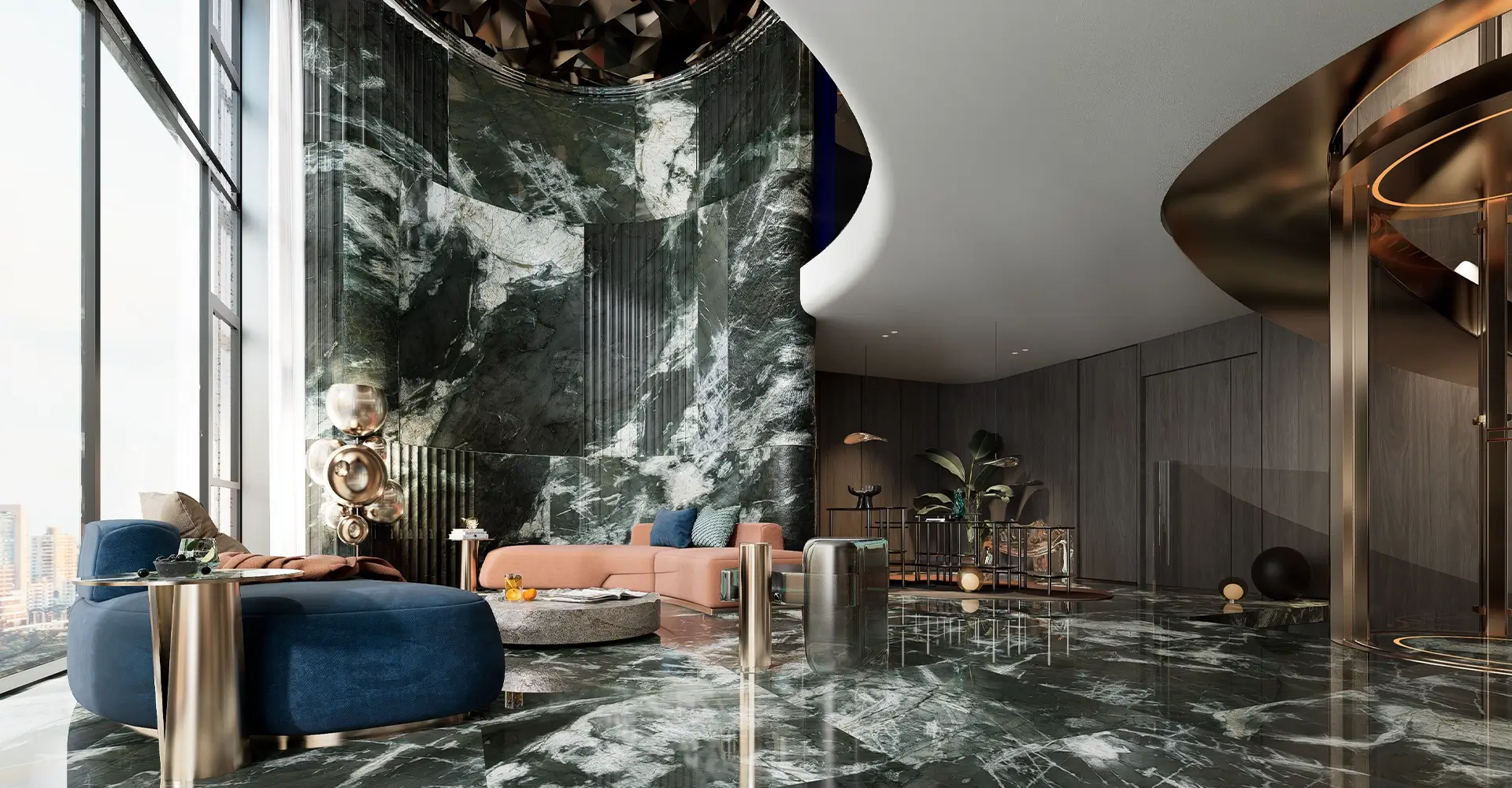
Green marble is often one of the most popular and valuable varieties. Its green color primarily comes from low-valence iron oxides (such as ferrous oxide, FeO) and magnesium-containing silicate minerals in the rock. Specifically, the coloring minerals include:
Serpentine: Molecular formula Mg₆Si₄O₁₀₈, often mixed with FeO, Fe₂O₃, NiO, etc., exhibiting various shades of green, often with snake-skin-like bluish-green patterns.
Chlorite
Diopside
Actinolite
Amphibole
Olivine
Sometimes, trace amounts of copper or chromium also contribute to the formation of the green color.Famous green marbles in China include “Danton Green” from Liaoning, “Laiyang Green” from Shandong, “Diecui” from Zhenghe, Fujian, and “Jinyu” from Changping, Beijing. These stones vary in color depth, some vibrant green, others deep dark green, creating a rich tapestry of green marble.
Yellow and Brown: Gifts of Hydrated Iron
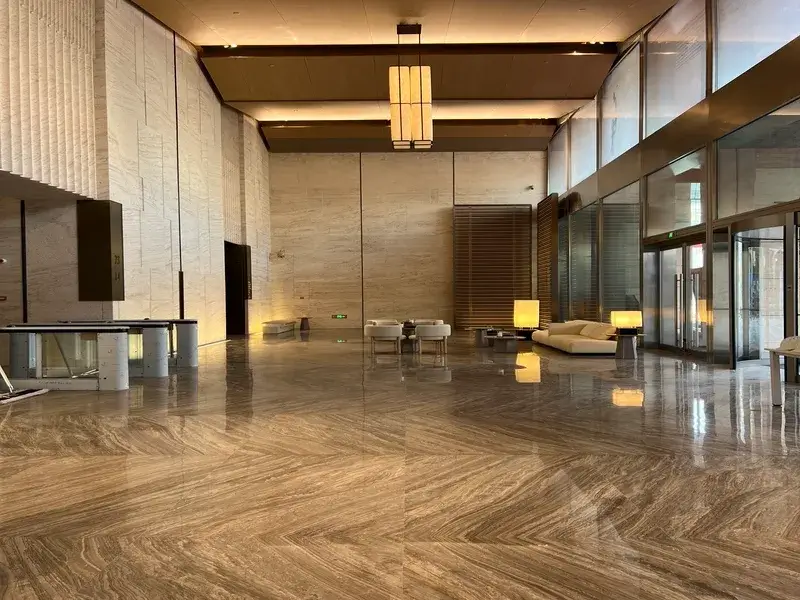
The colors of yellow and brown marble are usually associated with hydrated iron oxide minerals such as limonite (Fe₂O₃·nH₂O). Limonite is actually a mixture of various iron hydroxide minerals, and its color transitions from yellow to brown depending on the water content and degree of crystallinity.
Multicolor and Texture: A Symphony of Minerals
Many marbles are not a single color, but rather exhibit complex patterns, bands, or mottled designs. This is usually because the rock contains two or more impurities that are unevenly distributed during metamorphism or deformed and flowed under later tectonic activity, forming unique textures.
Furthermore, the “false color” phenomenon of minerals can also enhance the aesthetic appeal of marble. For example, calcite, due to its well-developed cleavage, sometimes creates rainbow-like halos when light is reflected and interfered with by the cleavage surfaces, adding a dreamlike effect to the marble.
The Coloring Mechanism of Granite: Different Rocks, Different Laws
It is important to note that the coloring mechanisms of marble and granite differ. Granite, as an igneous rock, is primarily determined by the colors of its rock-forming minerals: quartz is colorless or white, potassium feldspar is pink or red, plagioclase is grayish-white or gray, and amphibole, pyroxene, and biotite range from dark green to black. Therefore, as the content of dark minerals increases, the color of granite deepens.
In contrast, the color of marble depends more on the “staining” effect of impurity minerals than on the inherent color of the main minerals (calcite and dolomite).
Conclusion: The colors of marble are works of art meticulously crafted by nature over millions of years, using the earth as a kiln, pressure as a hammer, and heat as a fire. From the deep black created by organic carbon, to the passionate crimson rendered by iron oxide, and the vibrant green tinged with serpentine, each color tells a story of the environmental conditions and material composition during the rock’s formation.
Understanding the causes of marble’s colors not only allows us to better appreciate the unique beauty of this natural material but also helps us to scientifically select and use marble. Pure white marble is stable and durable; however, varieties containing vibrant elements such as red and green may have higher requirements for the environment in which they are used.
Next time you stand before a marble-decorated hall or are captivated by a marble sculpture, consider this: the beauty you see comes not only from the artist’s ingenuity but also from the creation of the earth over millions of years. Each piece of marble is a colorful love letter from nature to humankind.