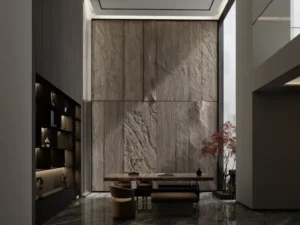
There is something undeniably striking about a freshly quarried marble slab. It is heavy, ancient, and honestly, a bit intimidating when trying to select just one piece from a massive stone yard. The sheer variety of patterns and hues can make the selection process feel endless, perhaps even overwhelming. Standing in front of row after row of cold, polished stone, it becomes obvious that no two pieces are exactly alike. That is the true draw, really—the absolute uniqueness of every single block pulled from the earth.
To make sense of it all, it helps to break down a marble slab by the characteristics that actually matter in a space: the base color, the chaotic (or sometimes incredibly orderly) veining, where the stone actually came from, and how the surface has been treated.
Sorting by Base Color: A Practical Way to Understand Marble
When selecting marble slabs, base color is usually the first filtering factor for architects, designers, and buyers. While white marble often dominates luxury imagery, the global marble market actually offers a broad range of tones—from crisp whites to deep blacks and warm browns.
Understanding these categories helps narrow down design direction, budget level, and project positioning.
The Classic White Marble Slabs
White marble Slab remains the most requested category in residential and commercial interiors. It reflects light well, enlarges visual space, and aligns with both classic and modern design styles.
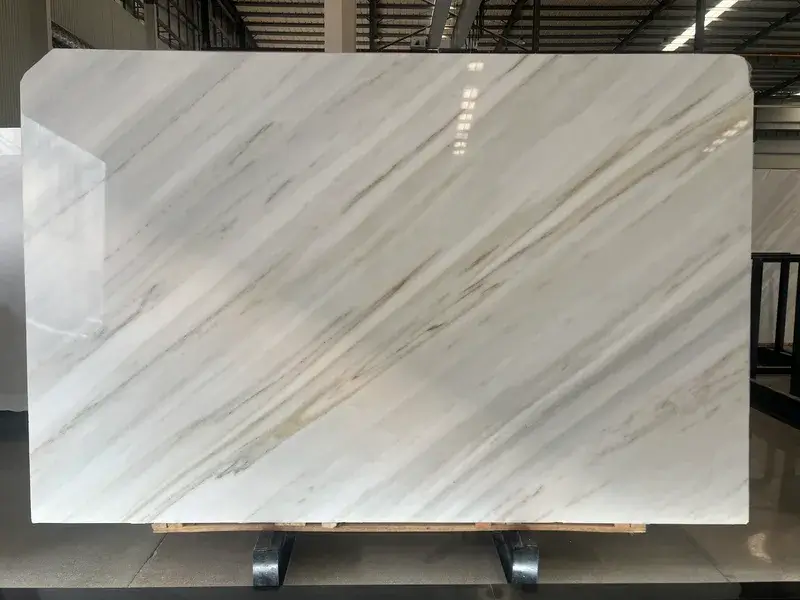
Carrara
Named after the Italian quarrying region of Carrara, Carrara marble is widely used due to its availability and balanced aesthetics.
It typically features a soft white to light gray background with fine, feathered veining. Compared with premium white varieties, it is more cost-efficient and easier to match across large projects.
Best suited for:
- Residential countertops
- Bathroom vanities
- Flooring in mid- to high-end projects
Calacatta
Calacatta is considered a higher-grade white marble. It has a brighter white background and bold, thick veining—sometimes with subtle gold undertones.
Due to its lower output and stronger visual impact, it is often used as a focal material rather than for full-surface installations.
Common applications:
- Feature walls
- Kitchen islands
- Luxury hospitality interiors
Statuario
Statuario combines a luminous white base with dramatic dark grey veining. It is rarer than Carrara and generally positioned in the high-end market segment.
It offers a strong contrast effect, making it popular for statement spaces and premium developments.
The Dark & Dramatic Stones
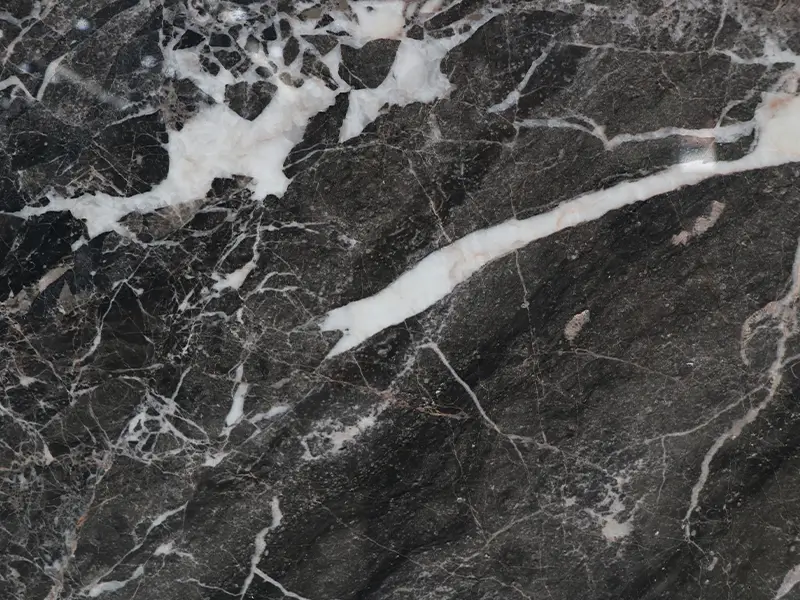
Dark marble slabs, such as grey marble slabs, are increasingly used in contemporary design, especially in commercial and boutique hospitality projects. They provide depth, contrast, and visual weight.
Nero Marquina
Originating from Spain, Nero Marquina features a deep black background crossed by sharp white veins.
Its clean contrast makes it ideal for modern, minimalist environments.
Common uses:
- Lobby floors
- Bathroom feature walls
- Luxury retail interiors
Emperador
Emperador marble, also from Spain, is known for its warm brown tones and lighter web-like veining.
Available in light and dark variations, it brings warmth and richness to interiors, making it suitable for projects that aim for a classic or corporate aesthetic.
Typical applications:
- Hotel interiors
- Office reception areas
- Wall cladding
The Colored & Specialty Marbles
Beyond white and dark tones, the market also offers distinctive options such as Green marble slabs and Rosa Portugues marble slabs. These stones are often selected for boutique projects or custom residential designs where uniqueness is prioritized over uniformity.
They are generally used in smaller quantities but deliver strong visual identity when applied strategically.
Understanding the Veining
If the background color is the canvas, the veining is the actual artwork. The lines running through a marble slab are essentially just mineral deposits—impurities trapped in the limestone millions of years ago—but they dictate the entire personality of the stone.
- Linear Veining: Sometimes, the lines run somewhat parallel, creating a directional flow. This looks incredibly sleek in long, continuous applications like a waterfall kitchen island.
- Spiderweb Veining: Stones like Emperador often feature this. The veins are thin, erratic, and cross over each other in a chaotic, fractured pattern.
- Breccia: This isn’t just veining; it looks almost as if the stone was smashed into chunks and glued back together naturally. It is highly textured visually and very dramatic.
The Geography of Stone: Origins
It is fascinating to think that the visual characteristics of a marble slab are entirely dictated by the specific mountain it was cut from.
Italy, naturally, dominates the conversation. The quarries of Carrara in the Apuan Alps have been supplying the world’s most famous sculptors and architects for centuries. There is a certain romance attached to Italian stone, likely due to this historical pedigree.
However, Spain is an absolute powerhouse when it comes to darker stones. The mountains of the Iberian Peninsula produce the world’s finest Nero Marquina and Emperador. Greece, too, offers some incredibly pure white stones, like Thassos, which is practically devoid of any veining whatsoever—just pure, blinding white crystal. And then there is Brazil, known more for quartzite and granite, but increasingly producing heavily patterned, wildly colorful marble variants that defy traditional categorization.
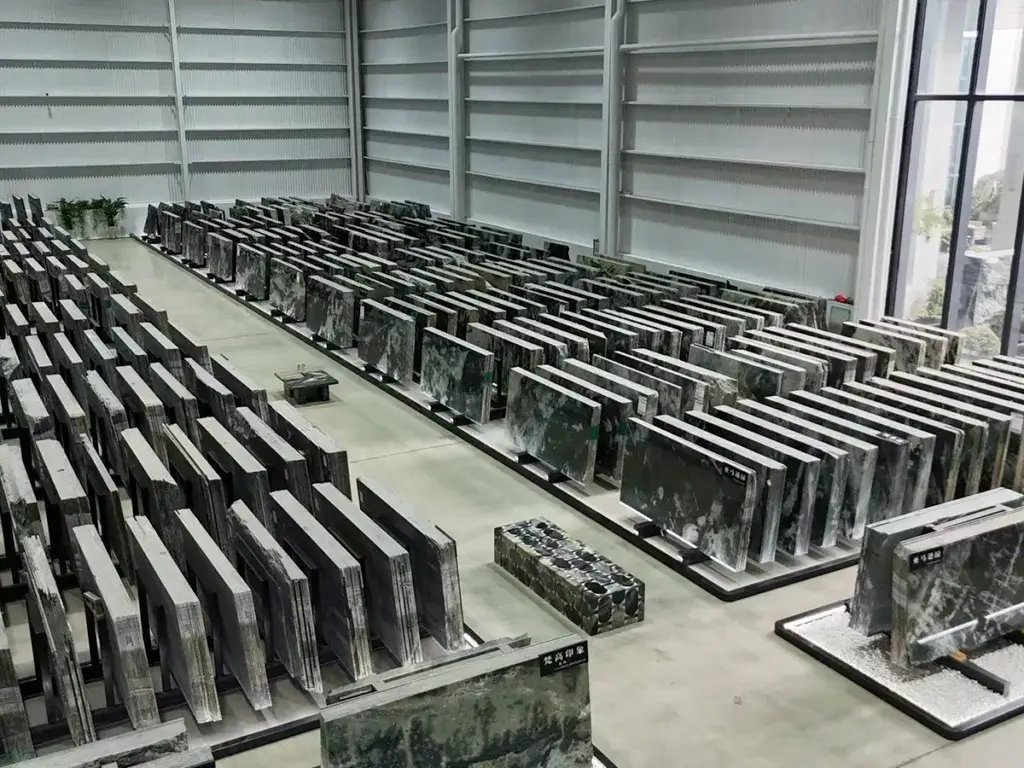
Surface Finishes: Changing the Feel
Picking the stone is only half the battle. How the surface of the marble slab is finished completely alters both its look and its practical day-to-day usability.
The High-Gloss Polish
This is the standard. Polishing the stone brings out the absolute maximum contrast in the veining and makes the colors pop violently. It reflects light beautifully, making spaces feel larger. However—and this is a big however—a polished finish shows every single etch, scratch, and water spot. It requires a level of vigilance that can be exhausting in a busy kitchen.
The Soft Honed Finish
A honed marble slab has the polishing process stopped just before it gets shiny. The result is a matte, smooth surface that feels almost velvety to the touch. The colors are slightly muted, and the veining looks softer. Practically speaking, it is far more forgiving of scratches and minor etches, making it a favorite for flooring and active countertops.
The Textured Leathered Finish
Leathering involves brushing the stone with diamond-tipped brushes to sweep away the softer particles. It leaves a rolling, textured surface that actually feels like heavy leather. It hides fingerprints and smudges perfectly, though it is usually reserved for darker stones where the texture can really be appreciated.
A Quick Reference Comparison
When trying to weigh the options, seeing the most common choices side-by-side can clarify the decision-making process.
| Marble Type | Primary Background Color | Veining Style | Primary Origin |
|---|---|---|---|
| Carrara | Soft White / Light Grey | Feathery, subtle, greyish | Italy |
| Calacatta | Bright, Crisp White | Bold, thick, dramatic grey/gold | Italy |
| Nero Marquina | Deep Black | Sharp, lightning-strike white | Spain |
| Emperador | Rich Brown | Fine, chaotic, spiderweb-like | Spain |