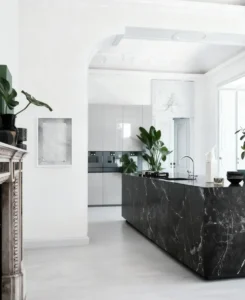
Marble for Kitchen countertops has a reputation that is both flattering and slightly intimidating. It is admired for its veining, depth, and natural elegance, but it is also known for being a little demanding in everyday use. That combination is probably why it keeps showing up in kitchens that care about appearance, atmosphere, and material quality.
The good news is that marble does not need to be treated like a museum piece. It does, however, need a bit of routine care. Once those habits become normal, the stone can age in a way that feels graceful rather than troublesome. And that is really the point: not perfection, just a surface that stays attractive and functional over time.

Why marble still attracts kitchen owners
There is a reason marble remains so popular even with all the warnings attached to it. It simply looks special. The veining has movement, the color has depth, and the surface often gives a kitchen a softer, more layered appearance than synthetic materials.
Some materials try to imitate this feeling, but marble has a natural irregularity that is hard to fake. A slab can be dramatic or understated, bright white or moody gray, and sometimes all of that is part of the same stone. That unpredictability is part of the charm.
For many homeowners, marble for Kitchen spaces is less about practicality alone and more about creating a kitchen that feels calm, refined, and unmistakably personal.
What marble needs to stay in good shape
Understand the stone’s sensitivity
Marble is a calcium-based natural stone, which means it reacts to acids. That matters more in kitchens than anywhere else because kitchens are full of acidic ingredients and cleaners. Lemon juice, vinegar, tomato sauce, wine, and even some bathroom-style cleaning sprays can leave a mark.
Those marks are usually called etches. They are not always deep damage, but they do change the finish. That is why marble often looks best in kitchens where care is part of the routine, not an afterthought.
Why sealing matters, but only up to a point
Sealing is helpful, but it is not a magic fix. It slows down absorption, which gives the stone more time to resist spills. It does not stop etching, and it does not make marble stain-proof.
A lot of people hear “sealed marble” and assume the surface is fully protected. In practice, sealing simply buys time and lowers risk. It is useful, just not absolute.
Polished vs honed finishes
Finish matters more than many homeowners expect.
- Polished marble has a glossy look and usually shows etching more clearly.
- Honed marble has a softer, matte finish that can hide minor wear a little better.
Honed marble is not more durable in every sense, but it can be more forgiving visually. That is one reason it shows up so often in kitchens that expect regular use.
Daily care habits that make a real difference
The best part about marble maintenance is that many of the most effective habits are simple. Not glamorous, but simple.
Wipe spills quickly
This is the most important habit by far. Acidic liquids and oils should not sit on the surface. Even a short delay can leave a mark, especially on lighter marble.
It helps to think of marble as a surface that prefers prompt attention, not constant worry. Quick wiping becomes second nature after a while.
Use the right cleaning products
Marble does best with pH-neutral cleaners made for natural stone. Mild dish soap and warm water are usually fine for routine cleaning, though the surface should be dried afterward rather than left damp.
Avoid:
- vinegar
- lemon-based cleaners
- bleach
- abrasive powders
- harsh scrub pads
Those products may be fine on other surfaces, but marble does not respond well to them.
Protect the surface from heat and sharp tools
Marble can handle normal kitchen temperatures reasonably well, but hot pans should still go on trivets or pads. It is a small habit that prevents stress marks and accidental dulling.
Likewise, cutting directly on marble is not ideal. It can scratch the surface and, perhaps more importantly, it is rough on knives. A cutting board just makes more sense.
Small habits that prevent bigger problems
A few simple habits tend to pay off:
- use coasters under glasses and bottles
- keep citrus prep on a board
- dry the sink area after heavy use
- avoid dragging appliances across the counter
- place trays under soap bottles or dish racks
None of these things are dramatic on their own. Together, they reduce the sort of slow wear that makes marble look tired.

Common marble problems and how to handle them
Etching
Etching is probably the issue that surprises people most. It appears as a dull spot or faint discoloration where acid touched the stone. Sometimes it is subtle; sometimes it is obvious.
Light etching may improve with gentle polishing products made for marble, but deeper etching often needs professional restoration. The important thing is not to mistake etching for dirt and scrub aggressively. That usually makes it worse.
Stains
Stains are different from etches. They happen when a substance absorbs into the stone. Oil-based stains often look dark, while organic stains can leave yellowish or brownish marks.
Some stain-removal methods use a poultice, which is a paste that draws material out of the stone over time. That can work well, but it is not always instant. Patience matters here, which is not exactly the most exciting part of marble care, but it is realistic.
Water spots and residue
Hard water can leave cloudy marks or mineral buildup, especially around sinks and faucets. These are often removable with a stone-safe cleaner and a microfiber cloth. The key is to avoid reaching for acidic cleaners, even if they seem like the obvious solution.
Chips and scratches
Small chips can happen along edges, especially around busy work zones. Scratches are more common on honed surfaces, though polished surfaces show them differently. Minor issues can sometimes be repaired by a stone professional, while deeper damage may require more involved refinishing.
Marble maintenance schedule for kitchen use
A simple routine is often easier to follow than a complicated one.
| Task | Frequency | Why it matters |
|---|---|---|
| Wipe counters with a soft cloth | Daily | Prevents spills from sitting too long |
| Clean with pH-neutral stone cleaner | 2–3 times per week | Removes buildup safely |
| Check for water spots or residue | Weekly | Keeps sinks and prep areas looking fresh |
| Test sealant with water drops | Every few months | Helps determine when resealing may be needed |
| Reseal if needed | Usually 1–2 times per year, depending on use | Slows absorption and staining |
| Schedule professional restoration | As needed | Useful for heavy etching or deeper wear |
This kind of schedule is not rigid. Some kitchens need more attention, some less. It mostly depends on how often the counter is used and what kinds of cooking happen on it.
When marble is a practical choice for the kitchen
Marble is a practical choice when the kitchen balances function and restraint. It tends to work well in:
- baking areas
- islands used for light prep or serving
- secondary counters
- kitchens where the owners are comfortable with natural patina
It is usually less ideal in highly active family kitchens where spills, chopping, and constant cleaning happen all day. That does not make marble a bad choice. It just means it may be the wrong fit for a certain rhythm of life.
Sometimes the smartest solution is to use marble selectively. A kitchen island, for example, can carry the visual impact without exposing the whole room to the same level of wear.
Choosing marble with maintenance in mind
Not all marble behaves the same way. Some stones have a softer visual pattern that hides daily use a little better, while others make every mark more noticeable. The finish also matters, as mentioned earlier, but so does the color and veining.
Darker or more heavily patterned stones can sometimes be more forgiving in day-to-day use. Softer white marbles often look incredible, but they tend to show etching and staining more clearly. That tradeoff is worth considering before installation, not after.
For readers exploring styles and applications, the collection at marble for kitchen offers a useful starting point for comparing options and finishes.
If the goal is a more distinctive look, marbles with richer movement and tone can be especially appealing. A stone such as Grigio Carnico Marble brings a deeper gray character that feels a little more grounded. For a more expressive statement, Amazon Green Marble offers a dramatic natural color that instantly changes the mood of a kitchen.

Final thoughts
Marble for Kitchen countertops can be a beautiful choice, but it rewards people who understand what the material asks for. The maintenance is not extreme, yet it is real. Quick cleanup, gentle products, and a little routine care go a long way.
For many homeowners, that tradeoff feels completely worth it. Marble brings a kitchen a sense of texture and calm that is hard to replicate. It does not stay perfect, and that is part of the appeal. It wears in, not just out.
If you want to know more about marble for kitchen, please read Marble for Kitchen: Is Mabrle Good For Kitchen Countertops?
FAQ
Can marble countertops be restored if they look dull?
Yes, in many cases. Dullness caused by light etching or surface wear can often be improved through professional polishing or honing. The exact result depends on the stone’s finish and how deep the damage is.
Is dish soap safe for marble?
Generally, mild dish soap is safe when diluted properly and followed by drying. The issue is usually not the soap itself but soaps with harsh additives, strong degreasers, or overly acidic formulas.
Does honed marble need less care than polished marble?
Not less care overall, but it can be more forgiving visually. Honed marble may hide minor etching better, though it can also show oils or residue differently. The basic maintenance habits are still the same.