Selecting the right stone for a high-end project often feels like a balancing act between aesthetic vision and the harsh reality of logistics. Most people start by looking at samples in a showroom, but few realize that the most successful projects usually start much further back—at the source. Working with a marble manufacturer that owns its own quarry isn’t just about a “direct-to-consumer” price tag; it’s about the unique security that comes from knowing exactly where the mountain ends and your floor begins.
How a Marble Manufacturer Reduces Supply Chain Uncertainty
When a Marble manufacturer owns the quarry, the entire marbl supply chain shifts from a game of telephone to a streamlined conversation. In typical scenarios, marble passes through brokers, exporters, and local distributors before reaching the fabrication shop. Each handoff adds a layer of markup and, more importantly, a layer of uncertainty.
By eliminating the middleman, the marble manufacturer with its own quarry gains an intimate understanding of the stone’s “personality.” Marble is a natural product, and its veins can change character within a few meters of extraction. A quarry owner sees these shifts coming months in advance, allowing for better planning on large-scale architectural projects.
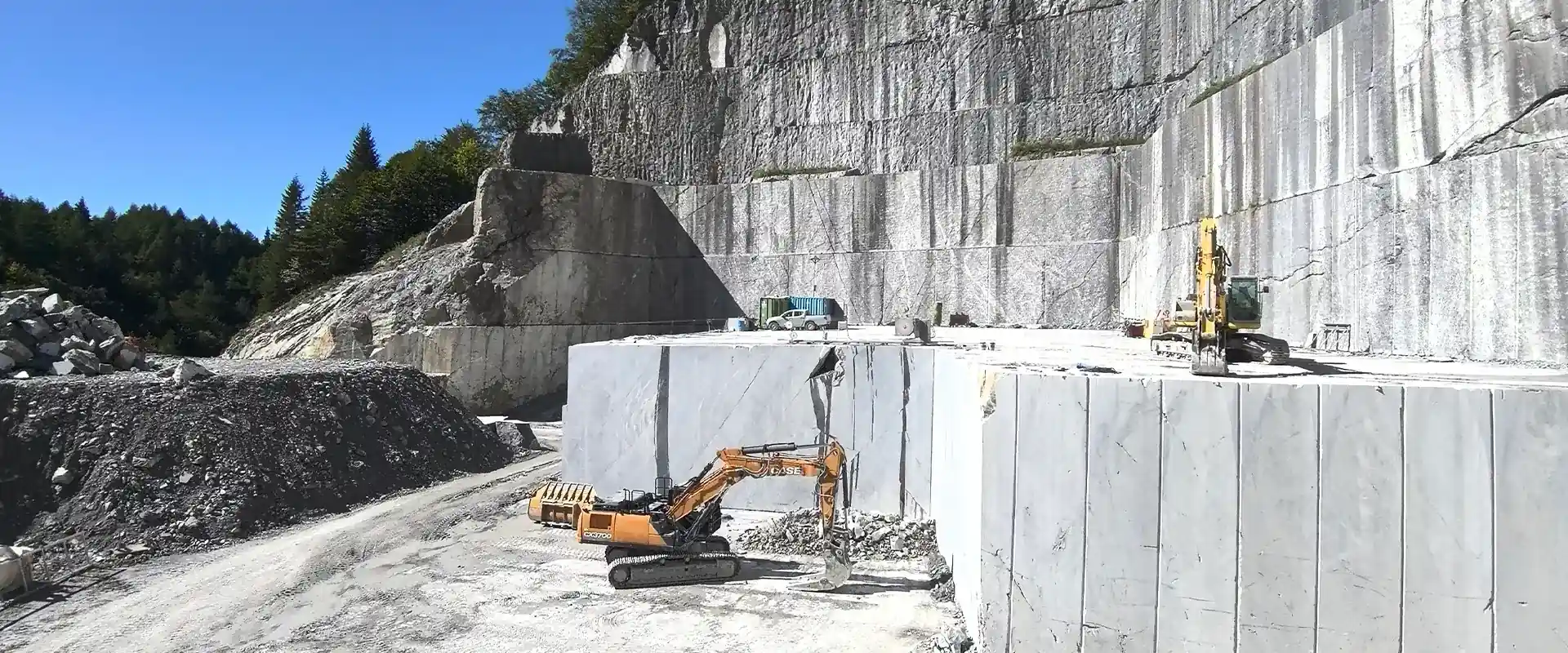
How a Marble Manufacturer Ensures Geologial Continuity
One of the biggest headaches in luxury construction is “batch mismatch.” You order ten grey marble slabs for a lobby, and then realize you need two more for a feature wall. If you’re buying from a secondary wholesaler, those extra slabs might come from a different block or even a different section of the quarry, leading to jarring color shifts.
- Consistent Veining: Since the material comes from a controlled section of the quarry, matching patterns (book-matching) becomes significantly easier.
- Color Uniformity: Large-scale projects require thousands of square meters. Quarry owners can reserve specific “benches” of the mountain to ensure the background shade remains constant.
- Long-term Availability: If a piece breaks during installation three years from now, a manufacturer with its own quarry is your best bet for finding a replacement that actually looks like it belongs.
Which Marble Supply Chain Model Is Right for Your Project?
It helps to see how the traditional model stacks up against the quarry-owner model. The differences aren’t always about money; they’re often about the level of risk the buyer inherits.
| Feature | Middleman Model | Own Quarry Model |
|---|---|---|
| Price Stability | Vulnerable to market | Highly stable |
| Quality Control | Visual inspection only | Ground-up inspection |
| Customization | Limited to stock | Extraction to order |
| Lead Times | Dependent on 3rd parties | Direct scheduling |
| Sustainability | Difficult to track | Full transparency |
Is Your Marble Manufacturer Cutting Corners on Quality Control?
The Core Value of Resource
There is a subtle, almost invisible benefit to working with people who live and breathe the same mountain. A marble manufacturer with its own quarry isn’t just selling a product; they are managing a resource. This means the quality control starts at the extraction phase, not just at the final polishing.
From Block Selection to Final Polish
When the manufacturer controls the quarry, they can be picky. They don’t have to “make do” with whatever blocks the exporter sent them. If a block shows signs of internal fissures or “dry veins” during the initial cutting, it can be repurposed or discarded immediately rather than being processed into a subpar slab that might crack during installation.
- Block Selection: Identifying the most stable sections of the quarry for high-traffic flooring.
- Slab Processing: Utilizing advanced gang saws and polishing lines tailored to the specific hardness of that quarry’s stone.
- Dry Lay Inspection: Many quarry owners offer a “dry lay” service where the entire floor is laid out at the factory to check the flow of the veins before it is crated.
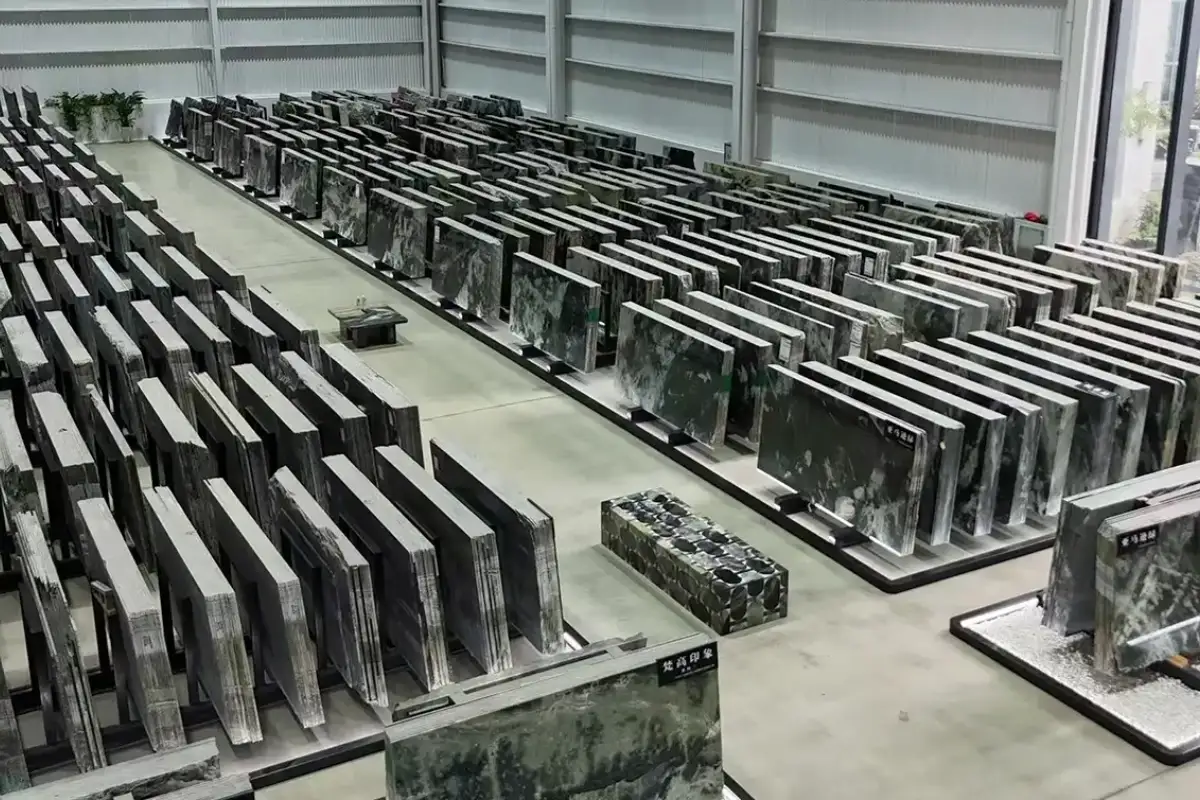
Why Is Direct Sourcing Cheaper & Safer for High-End Marble Projects?
It’s no secret that luxury stone is an investment. However, “expensive ” doesn’t have to mean “overpriced.” When working with a marble manufacturer with its own quarry, the cost structure is much leaner. You aren’t paying for the broker’s commission, the international trading company’s overhead, or the local showroom’s expensive rent.
Furthermore, there is the matter of lead times. In the construction world, time is quite literally money. If a shipment is delayed because a wholesaler is waiting for a container to fill up, the entire project stalls. A quarry-owning manufacturer controls the shipping schedule, often resulting in much more reliable timelines for international delivery.
Final Reflections
In the end, choosing a marble manufacturer with its own quarry is about peace of mind. There is a certain weight—a literal and metaphorical one—to knowing the origin of the material that will define a space for decades. It turns a simple purchase into a partnership with the land itself, ensuring that the natural beauty of the marble is matched by the integrity of its journey from the earth to the architecture.
FAQ
Does quarry ownership affect the environmental footprint of the marble?
Yes, significantly. Because the marble manufacturer controls the entire site, they can implement more cohesive land reclamation projects and waste-water recycling systems. Instead of having stone shipped to a separate factory hundreds of miles away, the processing often happens on-site, which drastically reduces the carbon emissions associated with heavy-load transportation.
Can a quarry-owning manufacturer handle "bespoke" architectural requests better than a trader?
Absolutely. A trader is limited to standard 2cm or 3cm slabs already in stock. A quarry owner can extract a specific “mega-block” to create oversized monolithic pieces, such as solid stone bathtubs, massive columns, or extra-thick landscape steps, providing structural possibilities that simply don’t exist in a retail showroom.
How does this model impact the "grading" of the stone?
Grading is often subjective in the stone industry. However, a marble manufacturer with its own quarry can offer a more honest appraisal. They categorize their mountain into “First Choice,” “Standard,” and “Commercial” grades based on the actual density and vein clarity of the geological layer, rather than just aesthetic trends, giving the buyer more technical transparency.