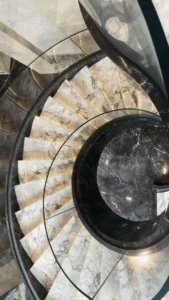
If you have flipped through renovation galleries lately, or walked the stone shows this year, you may have noticed a shift: the mirror-polished marble that used to define luxury is quietly disappearing from designer schemes. In its place are surfaces with subtle grain under the fingertips, surfaces that do not bounce light back at you, surfaces that look “less shiny.” This is not just aesthetic fatigue. There are practical reasons behind it.
What Went Wrong with Gloss
The problem with polished marble can be summed up in one sentence: it amplifies everything. Fingerprints, water marks, grease, every speck of dust on the counter—none of them can hide on a highly reflective surface. One New York designer put it bluntly: “A high-gloss surface reflects everything: fingerprints, smudges, watermarks, even the wrong kind of lighting.” More importantly, the definition of luxury has shifted. It used to be about looking expensive. Now it is about not being high-maintenance. A countertop that requires three wipes a day to stay presentable no longer reads as refined in today’s design language.
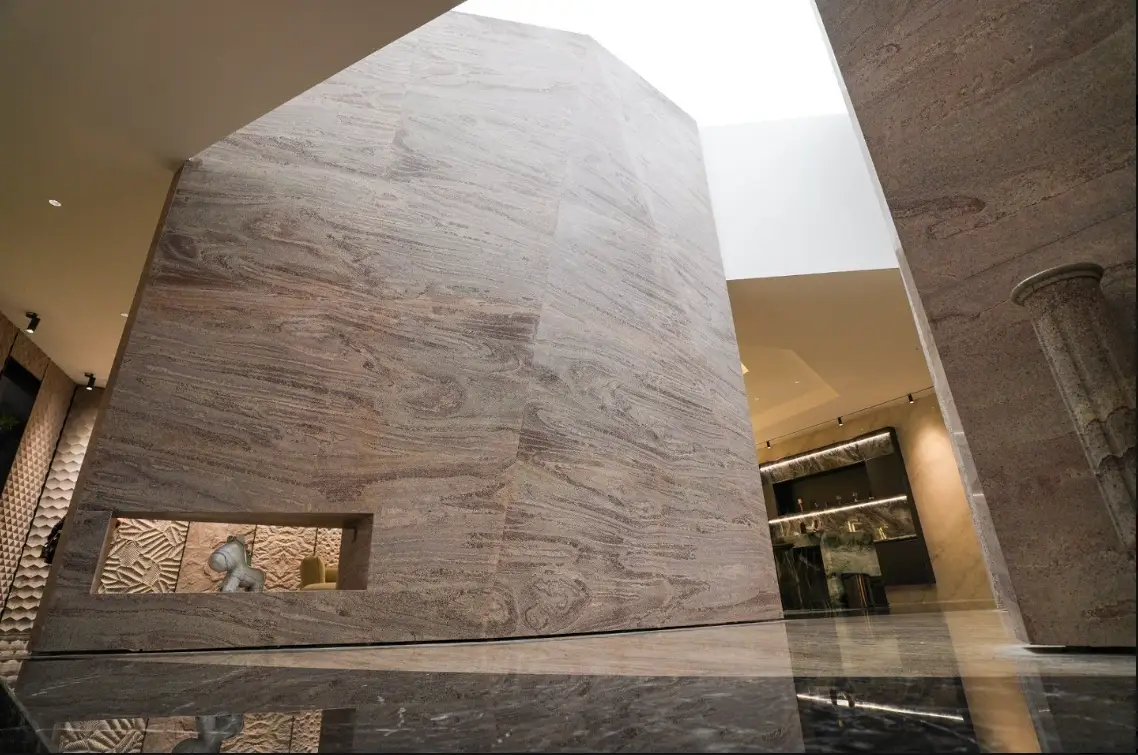
There is also a visual reason. Polishing flattens the natural depth of stone. Light forms a reflective layer on the surface; the first thing you see is the glare, and only the second thing is the stone itself. Designers say the shine itself “reads a bit artificial,” making natural materials feel more manufactured than organic. The most valuable quality of natural marble—the unpredictable, unrepeatable depth of its veining—gets buried under the gloss.
What Designers Are Choosing Instead
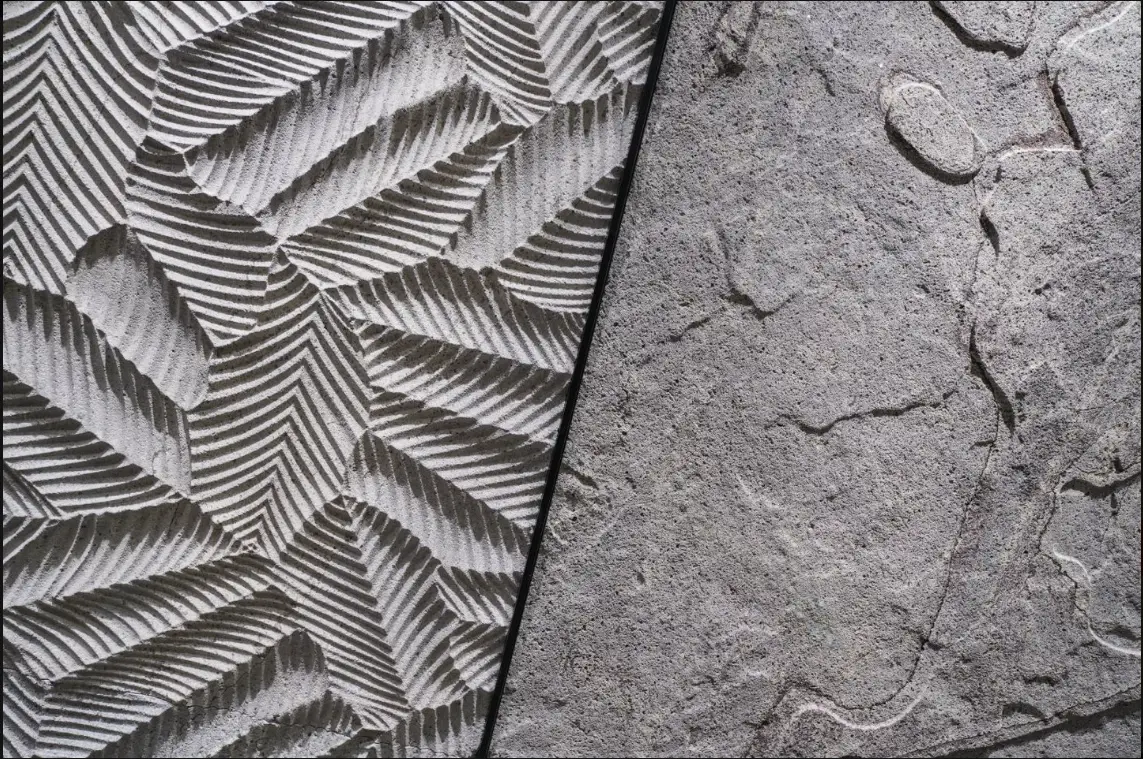
The answer centers on a few keywords: honed, leathered, brushed. What these finishes share is that they do not chase reflection; they let light absorb into the stone. One designer’s description is precise: “A honed marble feels almost velvety; it has presence without being loud.”
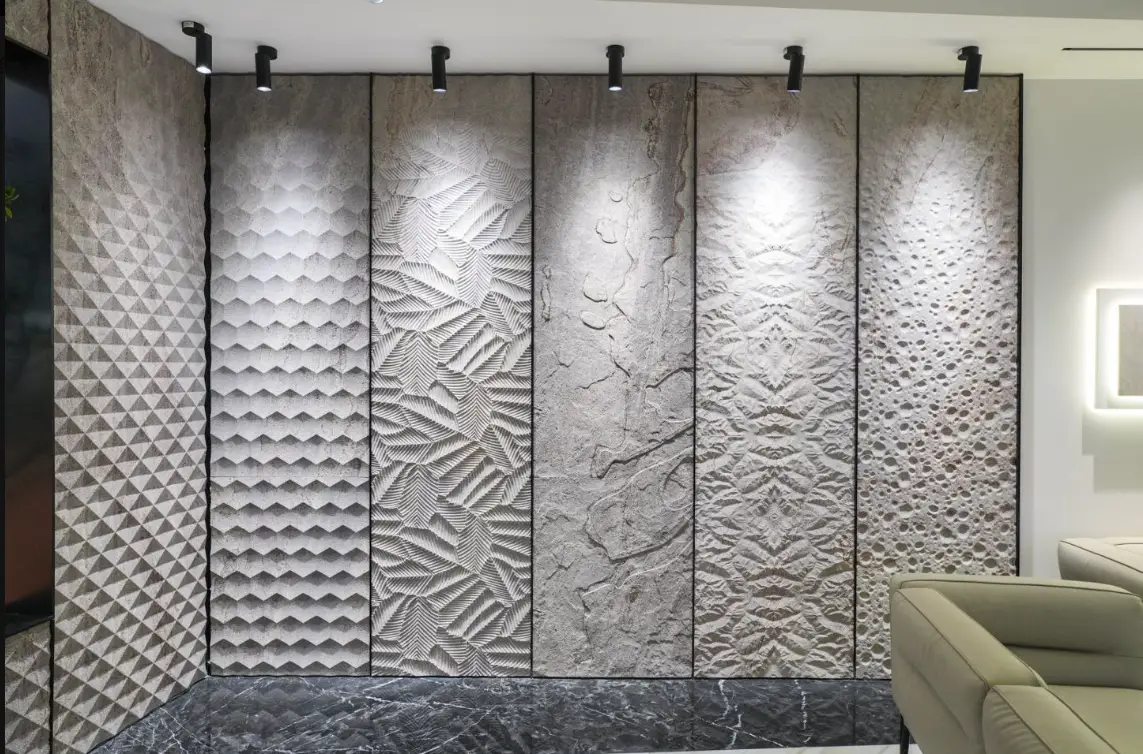
Honed is the most common alternative. The surface is flat but has no gloss; light diffuses rather than bounces. Industry guides note that honed finishes are particularly suited to marble floors, bathroom surfaces, and kitchen countertops—places that never needed a mirror in the first place. Leathered goes a step further, retaining some texture and tactile quality while preserving more color depth than conventional honing. Brushed sits somewhere between the two, giving stone a subtly aged character.
This is not the preference of one or two designers. In 2026 stone trend coverage, “honed and tactile finishes” comes up repeatedly. One industry observation states it directly: “High gloss is no longer the automatic luxury finish.” Another analysis goes deeper: contemporary stone wants to be touched, not just seen. A matte surface reveals the material’s internal structure, its veining, inclusions, the heterogeneity that makes every slab unique. In spaces where natural and artificial light are precisely designed, a surface that diffuses rather than reflects becomes a compositional tool.
What This Means for Choosing Stone
If you are choosing marble, or talking to a designer, this trend has a practical takeaway: decide where the stone goes before deciding the finish. Polished is not unusable, but its appropriate applications are specific. Traditionally, polished marble suits walls, decorative surfaces, and low-traffic areas. It maximizes color and contrast, and it still works where the goal is immediate visual impact.
But if you are choosing marble for a kitchen counter, a bathroom vanity, or anywhere that meets water, oil, or lemon juice, honed or leathered is the smarter call. The reason is not “it is trending.” It is practical: a honed surface does not reflect every fine scratch and etch mark back at you. On a polished surface, an etch mark interrupts the reflection and becomes glaringly obvious. On a honed surface, the same mark blends into the diffuse surface and reads far less harshly. In other words, honing does not make marble more durable. It makes the aging process less ugly.
One more thing worth noting: honed finishes change how marble’s color and veining read. Under polish, the stone is illuminated. Under honing, the stone seems to hold its own light. Low-saturation backgrounds and soft transitions in the veining appear warmer and more grounded, rather than washed out by reflection. If you chose marble for its natural character in the first place, honing brings you closer to what the stone actually is.

A Conclusion That Does Not Require Taking Sides
Polished marble is not dead. It has simply moved from default to specific. For a living room feature wall, an entryway console, a decorative tabletop, polish still has its place. But where daily use and the passage of time are part of the equation, honed and tactile finishes are becoming the more rational choice. What designers are abandoning is not marble itself, but the equation that gloss equals luxury.