If you have ever installed white marble in a bathroom, kitchen, or outdoor patio, you may have noticed something unsettling—when the stone gets wet, it appears darker, sometimes even greyish. This immediately raises the question: Is my marble permanently damaged?
The short answer is no—in most cases, the grey appearance is temporary and completely reversible. However, there are also situations where wet marble truly turns grey permanently. Understanding the difference is the key to protecting your investment.
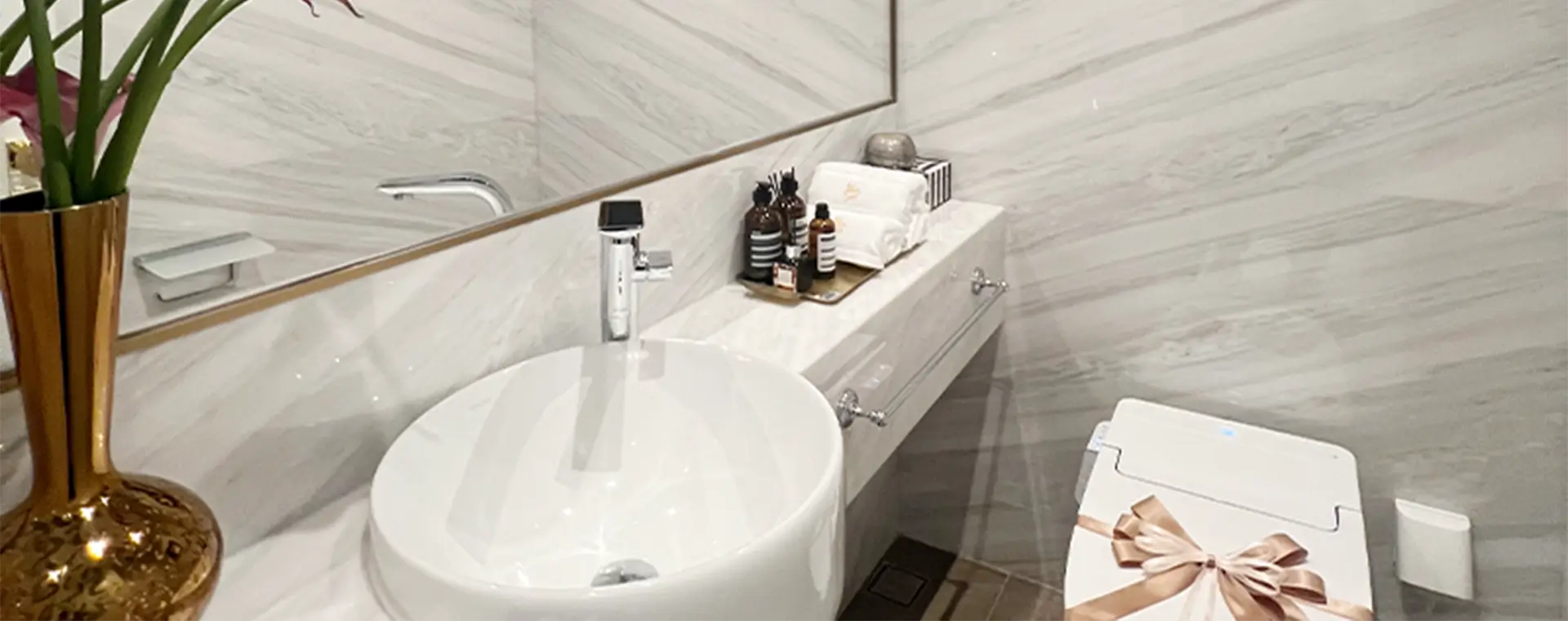
Why Does White Marble Look Grey When Wet?
1. The Science of Light Refraction
White marble is composed of calcite or dolomite crystals that are semi-translucent. When dry, light hits the stone surface, scatters through the microscopic crystal gaps, and reflects back to your eyes, creating a bright white or light appearance.
When water fills those microscopic pores and fissures, it changes the refractive index—the way light bends. Instead of scattering, light passes through more directly and absorbs more deeply into the stone. This reduces the amount of light reflected back, making the surface appear darker, often greyish or wet-looking.
This is the exact same reason why a white t-shirt looks darker when wet. It is a physical optics phenomenon, not a chemical change.
2. Temporary vs. Permanent Discoloration
| Condition | Appearance | Reversible? |
| Surface water (rain, spills, cleaning) | Darker, greyish tone | ✅ Yes – dries back to original color within hours |
| Trapped moisture (poor drainage, sealed-in water) | Consistent dark patches | ⚠️ Maybe – requires professional drying |
| Chemical alteration (acid etching, rust, organic staining) | Grey, yellow, or brown spots | ❌ No – requires repolishing or replacement |
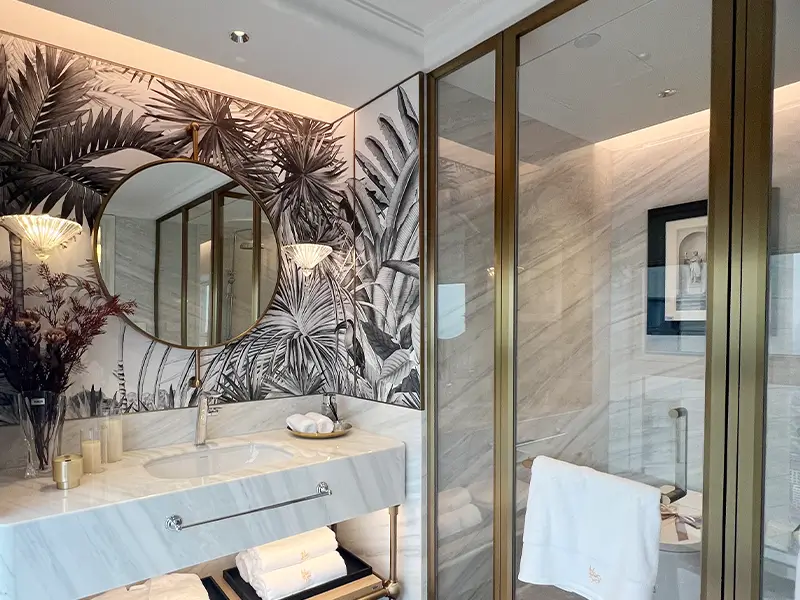
Common Scenarios – What Happens in Real Life?
Scenario 1: Bathroom Floor After Showering
After a hot shower, your white marble floor looks dull and grey. As the room dries and ventilates, the color returns within 1–3 hours. This is normal. No action needed other than proper ventilation.
Scenario 2: Outdoor Patio After Rain
Rainwater makes your marble paving look uniformly darker. Once the sun comes out and the surface dries, it returns to bright white. This is normal. However, if water pools in the same spot for days, it may lead to persistent damp patches.
Scenario 3: Kitchen Counter Near Sink
White marble near a sink that frequently gets wet may develop permanent greyish rings. Why? Because household water contains minerals, soap residues, and sometimes acidic substances (lemon, vinegar, tomato). These can chemically etch the polished surface, creating a dull, grey, roughened area that does NOT go away after drying.
This is not “turning grey from water”—this is acid etching that happens to occur in wet areas.
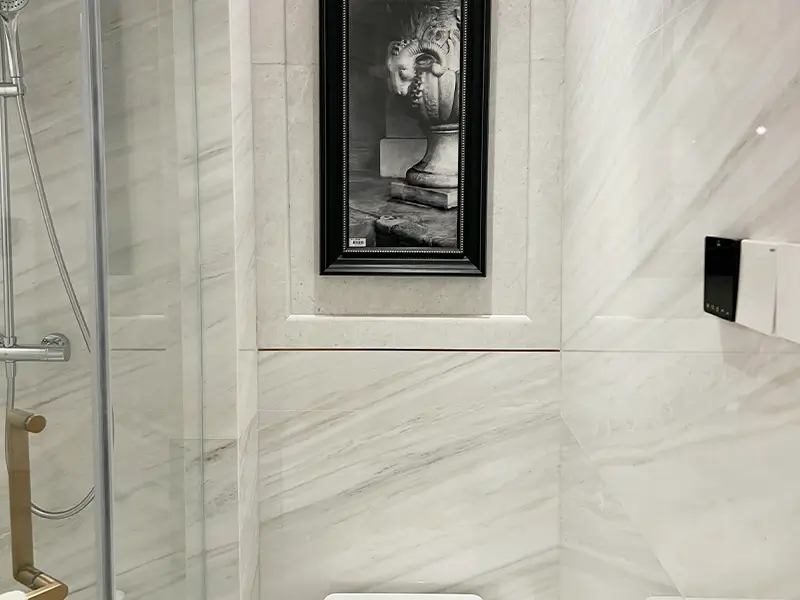
How to Prevent Permanent Grey Discoloration
1. Seal Your Marble Properly
A high-quality penetrating sealer reduces the stone’s porosity by 80–95%, significantly minimizing water absorption. This means less water enters the micro-cracks, so the “wet grey” effect is far less noticeable and drying happens faster.Recommendation: Apply a penetrating impregnating sealer every 12–18 months for high-traffic wet areas.
2. Wipe Spills Immediately
Do not let water, especially from cooking or cleaning, sit on the surface for extended periods. While pure water is generally safe, “dirty water” contains contaminants that can stain or etch.
3. Use Coasters, Trays, and Mats
In bathrooms and kitchens, use trays under soap dispensers, bottles, and toothbrush holders. Water trapped under these items evaporates slowly and can lead to persistent damp rings.
4. Ensure Proper Slope and Drainage (Outdoor) |For outdoor marble installations, confirm that the ground slopes at least 1–2% away from buildings to prevent standing water.
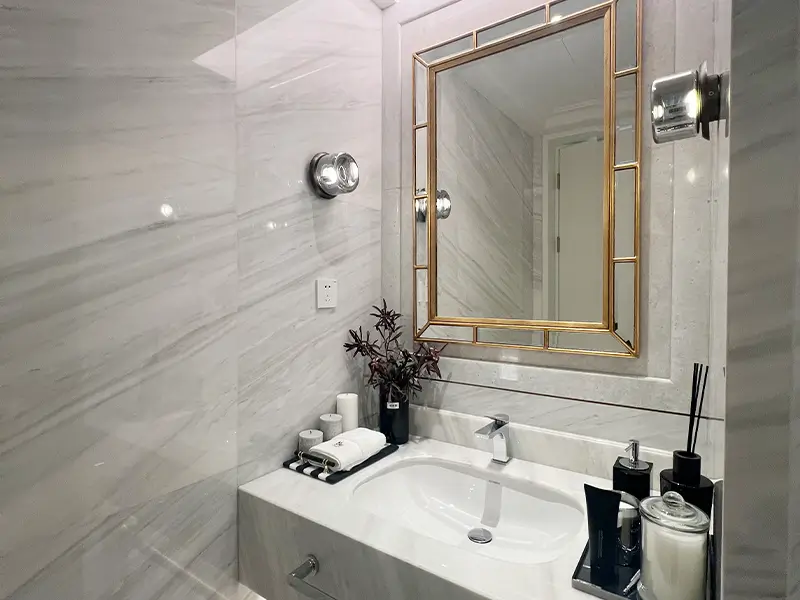
What to Do If Your White Marble Has Already Turned Grey
Step 1 – The 48-Hour Drying Test
Dry the area thoroughly with a towel, then let it air-dry with good ventilation for 48 hours. If the grey disappears, it was simply moisture-related. If it persists, proceed to Step 2.
Step 2 – Identify the Cause
Grey + rough texture → Acid etching. Needs professional honing and repolishing.
Grey + yellowish/brownish edge → Organic stain or rust. Use a poultice or stone-specific stain remover.
Grey + uniform dark patch → Trapped moisture. Use a dehumidifier or call a stone restoration professional with moisture extraction equipment.
Step 3 – Professional Restoration
For etching or deep stains, DIY solutions often make it worse. A stone restoration specialist will use diamond abrasives to remove the damaged layer and re-polish the surface to its original sheen.
Frequently Asked Questions
Q: Does all white marble turn grey when wet?
A: Yes, to varying degrees. Dense marbles like Carrara or Statuario show less effect, while more porous whites like Thassos or macro-crystalline marbles show more pronounced darkening.
Q: Can I seal marble to completely prevent wet-darkening?
A: No sealer can 100% prevent optical darkening because it happens at the crystal level. However, a good sealer reduces the effect by 70–80% and shortens drying time significantly.
Q: My marble turned grey after professional cleaning—why?
A: Many commercial cleaners use water-based solutions. The grey you see is the stone absorbing moisture from the cleaning process. It should disappear within 24–48 hours. If not, the cleaner may have used an improper pH or left residue.
Conclusion
White marble turning grey when wet is primarily a physical reaction—light refraction changes due to moisture. In 90% of everyday situations, this is temporary and completely harmless. The stone will return to its original white appearance once fully dried.
The real danger lies not in the water itself, but in what the water carries—acids, minerals, and contaminants—and in water that stays trapped for extended periods.
With proper sealing, prompt spill cleanup, and good ventilation, your white marble can remain beautiful for decades without permanent grey discoloration.
If you have any further questions about marble care, sealing, or restoration, feel free to contact our team.