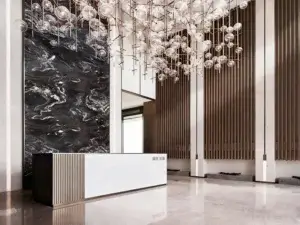
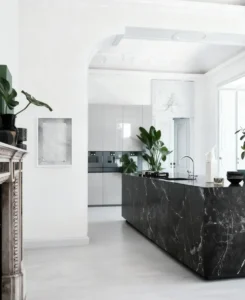
Although black stone appears dark, including marble and granite, the color of natural stone is formed naturally. The quality of the color is determined by the pigment ions it contains and its internal structure. Furthermore, the different orders in which the various minerals that make up the stone are formed also affect the color variation, which is known as color difference.
Stone processing plants use coloring processes (i.e., using dyes) to treat stone and address color differences, aiming to improve the stone’s appearance. However, after installation, dyed black stone often fades significantly due to natural weathering, friction, and pollution, severely impacting its decorative effect.
Like skin, black marble can be damaged. Severe damage can penetrate deep into the stone’s surface; minor damage can gradually destroy the smooth surface; and latent damage can accumulate in the stone’s micropores, slowly oxidizing into crystals. Over time, these crystals enlarge, pushing out the surface tissue and causing cracking. For example, hydrochloric acid, fruit acids, acidic cleaners, and wax removers all use corrosive principles to remove stains along with the thin surface layer, causing varying degrees of damage and leaving the stone’s surface very fragile.
1. Black Gold Flower
Black Gold Flower is one of the more precious varieties of marble. Its main characteristics are: black base color, golden yellow veins, fine lines, and good gloss.
Black Gold Flower has always been a top-tier stone due to its limited production and beautiful appearance. Its base color is black, with intermittent, evenly distributed golden-yellow stripes, resembling a layer of shimmering gold flecks sprinkled on black satin. It conveys a sense of stability and nobility, showcasing a unique magnificence and luxurious elegance, making it a rare and exquisite stone.
2. Black Crystal Jade
Black Crystal Jade originates from Spain, a country renowned for its high-grade stone. With a black base and alternating black and white veins, it is hard, with vibrant colors, bringing a high-end, elegant, and natural decorative effect to any space, showcasing a luxurious and sophisticated style. In terms of spatial application, Black Crystal Jade is very suitable for modern styles. Black is always a fashion trend and will always be associated with fashion, becoming a symbol of youthful trendsetters. Therefore, it is frequently used in modern spaces.
3. Galaxy Legend
Galaxy Legend is suitable for interior walls, floors, and feature walls. The base color is black, with interspersed golden and white veins creating a complex pattern on the entire surface. Patches of golden yellow resemble clusters of tiny stars, shimmering and sparkling; the Milky Way evokes a vast, all-encompassing landscape, while the mysterious black hole adds an intriguing element. Whether it’s the two-dimensional visual impact or the three-dimensional spatial experience, it conveys an enduring legend in the world of decoration.
4. Ink Charm
After a billion years of sedimentation, nature tells us that when black and white meet, they can still complement each other beautifully. Rather than a so-called gray area, black blends into the white ripples, irregular yet vividly harmonious, just like nature’s relationship with us.
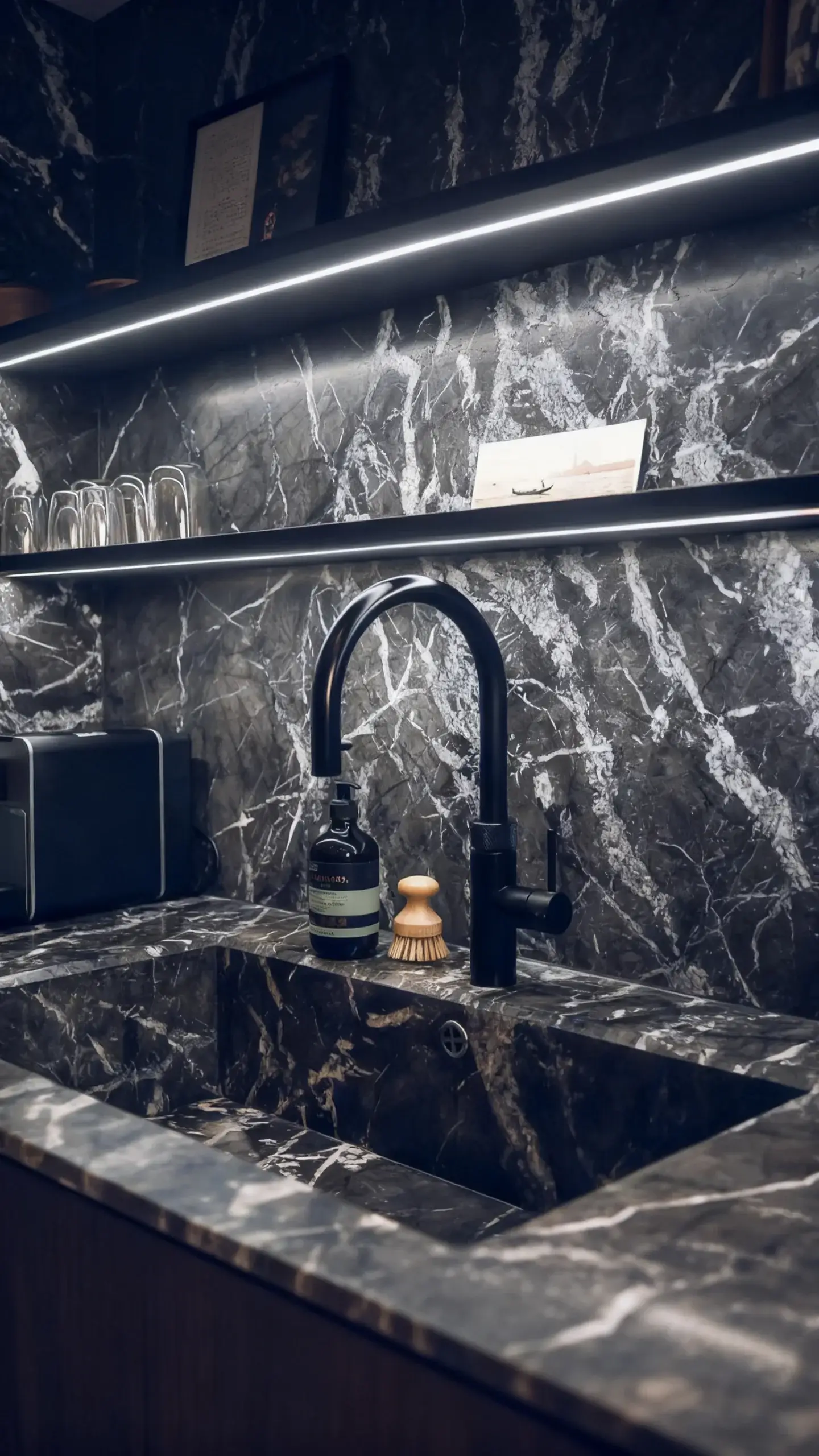
Routine maintenance of black marble
- a “black pigment” dye is used, i.e., a coloring process. However, because stone processing plants use a soaking method on the original slab for coloring, while the installed stone can only be coated with a “dye,” the color-fixing effect is significantly different; the latter usually only lasts about three months.
- for daily maintenance, use Crystal Powder.Crystal Powder is a new formula suitable for granite with a high silicon content, especially suitable for black and gray granite and dark marble. It’s used for surface repair and polishing of granite, contains no oxalic acid, has good light resistance, and can be used for long-term maintenance. For a longer lifespan for the stone, it is recommended to apply one to two coats of Jingmei series stone penetrating protective treatment before daily maintenance. Application method: Mix this product with TX5 crystal powder to form a paste, apply to the surface, and then polish repeatedly with a wire pad or fiber pad. Repeating the process once more will achieve better results.
- Use a “color-restoring protective agent,” i.e., apply protective agent to the stone surface to restore the stone’s color. However, this method can only achieve a maximum color restoration rate of 70% for black stone. Furthermore, both methods only deepen the color of polished stone and do not enhance its shine.
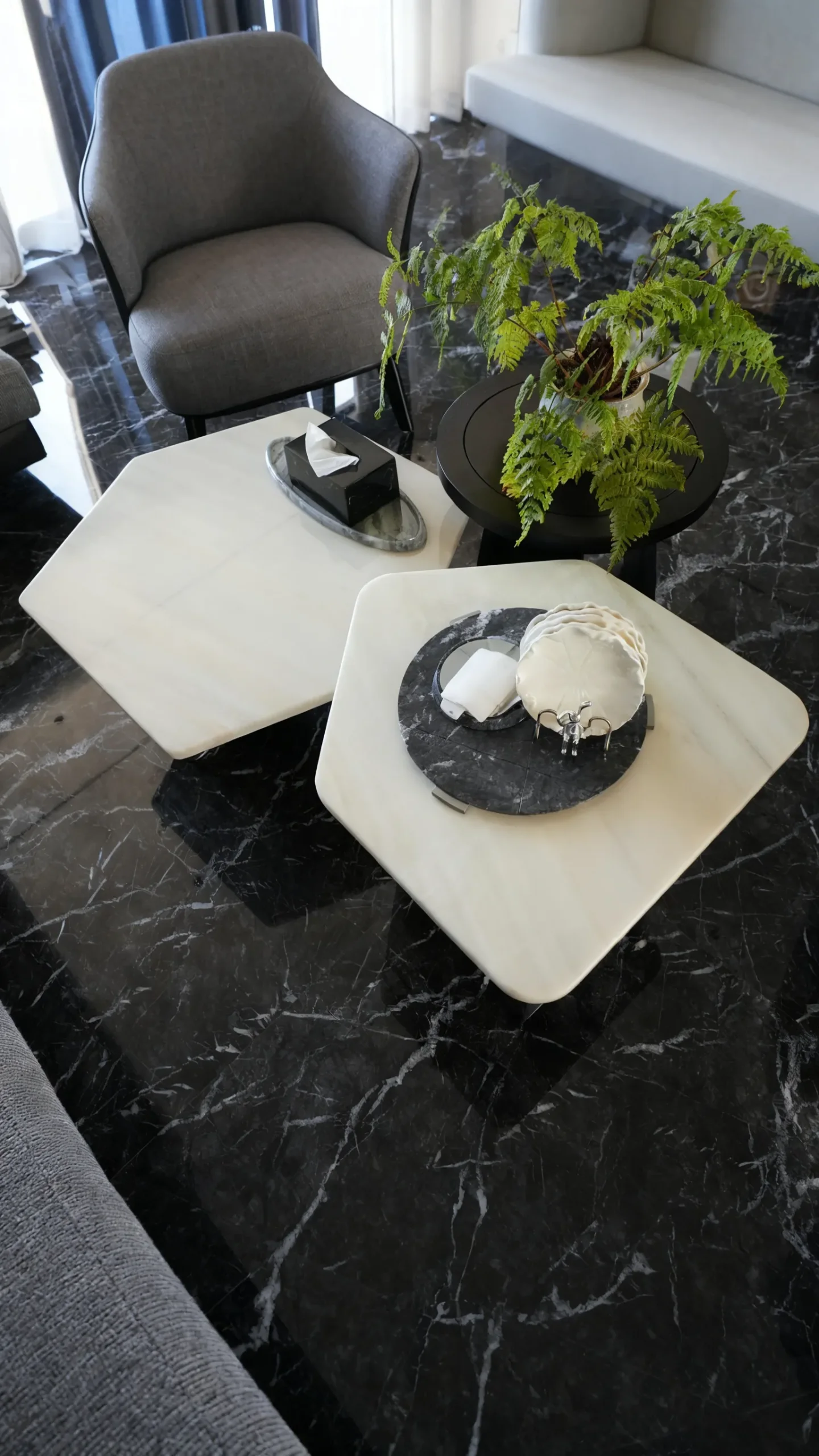
Regardless of the stone’s color, the following treatments are generally required:
- Water seepage and stains on stone exterior walls: Simply wipe with water; no other cleaning agents are needed.
- Water stain prevention: Apply a multi-purpose protective agent or a specialized stone protective agent before construction.
- Efflorescence treatment: Apply a protective treatment to the stone surface and enhance the waterproofing of the grout lines.
- Rust stain treatment: Use a strong remover to effectively remove rust stains without damaging the stone. It’s best to apply a protective treatment before installation.
- Stains treatment: Suitable stone-specific cleaners can effectively remove stains.
- Wax removal: Use a wax remover to effectively remove wax buildup from the stone surface and pores without damaging the stone’s shine. After wax removal, apply a multi-purpose protective agent.
- Treatment of yellowing (straw rope yellowing): Use a multi-purpose cleaner, followed by a protective treatment with a protective product to effectively prevent recurrence of yellowing.
- Treatment of wear and tear: Apply a stone care agent to the surface and perform a surface protection treatment periodically.