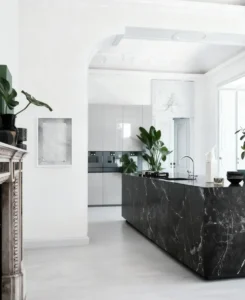
There’s a moment in almost every stone project where someone looks at the slab and asks: should we just buy what’s in stock, or go the custom route? The price difference can be significant. The lead time varies. And honestly, sometimes standard is perfectly fine. Other times, custom is the only way to get the result that’s actually wanted.
Having watched this decision play out in kitchen remodels, bathroom vanities, and even hotel lobbies, a few patterns emerge. The choice between standard and custom marble slabs isn’t about which is objectively better. It’s about what fits the specific project.
This is a look at the trade-offs.
What "Standard" Marble Slabs Actually Means
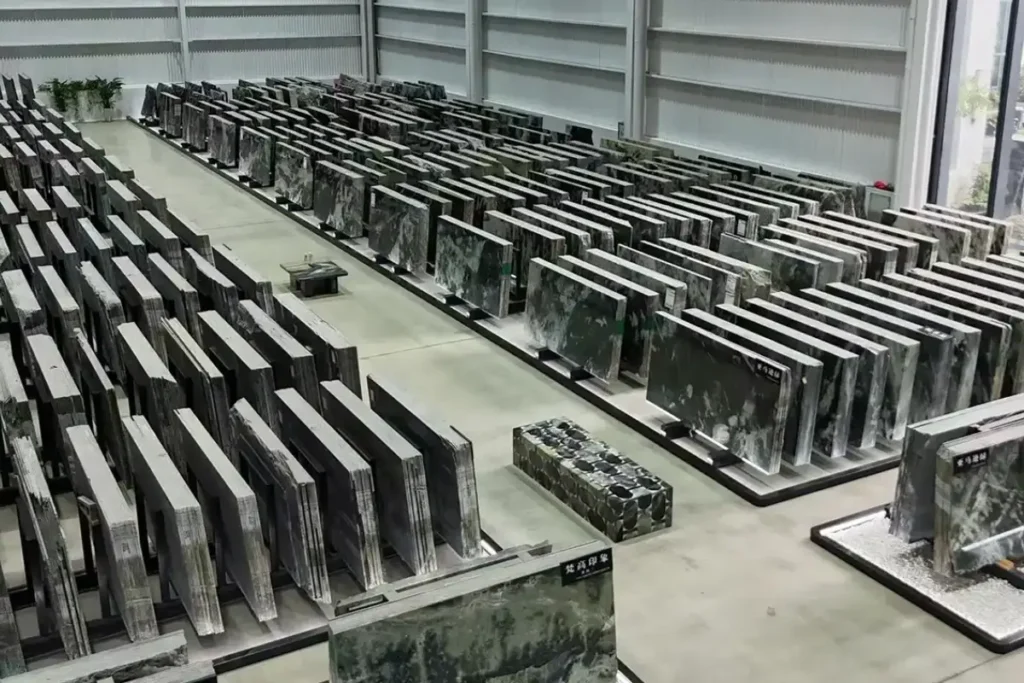
Standard marble slabs are just that—the typical sizes and thicknesses that come out of a quarry and sit in a distributor’s yard. Usually 8–10 feet long, 5–6 feet tall, and either 2 cm or 3 cm thick. They’re cut to those dimensions because that’s what fits most projects most of the time.
The Stock Slab Advantage
Buying standard slabs is faster and cheaper. A distributor like Dongdian Stone maintains inventory of popular marbles in standard dimensions. Walk in, pick a slab, and it’s ready to be fabricated. No waiting for a quarry to cut something special. No premium for non-standard sizing.
For a typical kitchen with standard countertop depths (25–26 inches) and island lengths under 8 feet, standard slabs work just fine. The fabricator cuts what’s needed from the slab, and the rest goes to waste or is saved for smaller pieces.
The Limitations
Standard slabs have limits. If a kitchen island is 11 feet long, a standard 9-foot slab won’t cover it in one piece. That means a seam. Seams are fine—stone fabricators do them all the time—but some people don’t want a visible seam on a prominent island.
Similarly, if a backsplash needs to be 30 inches tall (taller than standard backsplash height), a standard slab might not yield enough material without awkward cuts.
What Custom Marble Slabs Offer
Custom marble slabs take a different approach. Instead of working with whatever dimensions are standard, the manufacturer cuts slabs to specific sizes needed for the project. This might mean longer slabs, unusual widths, or non-standard thicknesses.
The Real Benefits
The main reason to go custom is seam reduction. A single 12-foot slab for a long island means no seam. That’s a clean look that some people are willing to pay for.
Custom also allows for:
• Matching grain direction across large surfaces
• Thicker slabs (4 cm or more) for a substantial look
• Specific width requirements that standard slabs can’t accommodate
• Less waste on unusual layouts
The Costs
Custom isn’t cheap. A quarry cutting a non-standard slab size pays for setup, blade changes, and slower production. That cost gets passed along. A standard slab might be $50–$80 per square foot. A custom slab of the same stone could be $100–$150 per square foot or more.
Lead time also stretches. Standard slabs are on the lot. Custom slabs need to be ordered from the quarry, cut, shipped, and then fabricated. That’s often 8–16 weeks instead of 2–4.
Comparing Standard and Custom Marble Slabs
Here’s a side-by-side look at what each option delivers.
| Factor | Standard Slabs | Custom Marble Slabs |
|---|---|---|
| Lead time | 1–4 weeks (fabrication only) | 8–16 weeks (quarry to fabrication) |
| Cost per square foot | Lower (mass production) | Higher (special order) |
| Maximum length | 8–10 feet typical | Up to 12+ feet if quarry offers |
| Seams | May be needed for long runs | Can be eliminated for long runs |
| Availability | In stock at distributors like Dongdian Stone | Special order only |
| Waste | Some waste from standard cuts | Less waste, cut to exact needs |
| Returns | Possible if uncut | Usually non-returnable |
When Standard Marble Slabs Make Sense
Standard is the right call more often than people think. A few scenarios where it’s clearly better.
Typical Kitchens with Standard Layouts
Most kitchen countertops are 24–26 inches deep. Most islands are under 8 feet long. Standard slabs cover this easily. A fabricator can cut two countertops and an island from a single standard slab with careful layout.
Budget-Conscious Projects
Stone is already expensive. Paying 50–100% more for custom sizing might not deliver enough visual benefit to justify the cost. For projects where the budget is tight, putting that extra money toward higher-grade material or better edge profiles often makes more sense.
Projects with Seams That Don't Matter
Seams aren’t the enemy. A well-done seam is barely visible. In many kitchens, the sink or cooktop breaks up the countertop anyway, creating natural seam locations. In those cases, paying extra for a custom slab to avoid a seam is wasted money.
When Custom Marble Slabs Are Worth It
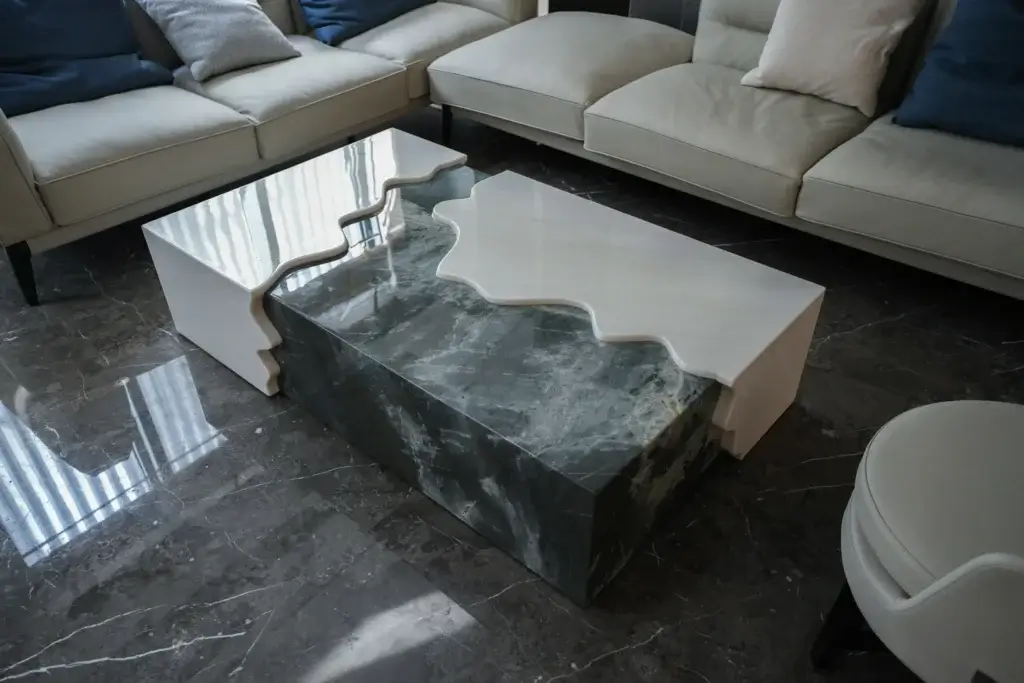
There are situations where standard won’t work well. Custom becomes the right answer.
Very Long Island or Peninsula
If an island runs 10, 11, or 12 feet without a break, a standard slab likely won’t cover it in one piece. Some people don’t mind a seam. Others do. For those who want a seamless look on a long run, custom is the only way.
Unusual Depth Requirements
A standard slab is about 5–6 feet tall (when oriented vertically for countertops). That yields two standard-depth countertops (25 inches each) with some waste. But if a project calls for a 36-inch-deep breakfast bar, standard slabs might not have enough depth. Custom solves that.
Matching Existing Stone
If a renovation needs to match existing marble that came from a specific quarry batch, standard stock slabs might not match. The color and veining vary between quarry blocks. Custom ordering from the same block ensures consistency.
Thicker Slabs for a Statement Look
Standard thickness is 2 cm or 3 cm. A 4 cm or 5 cm slab looks substantial—like a solid block of stone. That’s a luxury look. It requires custom cutting and often special fabrication because the weight is significant.
The Role of a Good Supplier
The choice between standard and custom gets easier with a knowledgeable supplier. A distributor like Dongdian Stone can look at a project layout and say, “Standard will work fine” or “You really need custom for that run.” That kind of advice saves money and prevents disappointment.
What a Supplier Should Offer
Clear pricing for both standard and custom options
• Honest lead time estimates
• The ability to view standard slabs in person
• Samples or photos for custom orders
• Seam placement recommendations
A supplier that pushes custom when standard would work isn’t helping. A good one matches the product to the actual need.
Cost Comparison Example
Let’s run a quick example. A kitchen needs 60 square feet of marble for countertops and an island. Standard slab cost: $70 per square foot for the material. Total material: $4,200. Fabrication and installation add another $3,000. Total around $7,200.
Custom slabs for the same project, ordered to avoid seams on a 10-foot island: $120 per square foot for the material. Total material: $7,200. Fabrication and installation similar at $3,000. Total around $10,200.
That’s a $3,000 difference for the same stone. Worth it? Depends on how much that seamless island matters.
Decision Checklist
Before deciding between standard and custom marble slabs, a few questions worth answering:
1. What’s the longest continuous run without a seam? Over 9 feet? Custom might be needed.
2. Is there an unusual depth requirement? Over 30 inches? Check standard slab dimensions first.
3. What’s the budget? Custom adds 50–100% to material cost.
4. What’s the timeline? Custom adds 4–12 weeks.
5. Does the stone need to match existing material? Custom from the same block ensures match.
If you want to know more about custom marble slabs, please read Custom Marble Slabs: Sizes, Finishes and Applications Explained.
FAQ
Are custom marble slabs always more expensive than standard?
Yes, typically 50–100% more per square foot. The premium covers special quarry cutting, longer lead times, and lower production efficiency.
Can I get custom marble slabs from any supplier?
Not all suppliers offer custom sizing. Distributors like Dongdian Stone focus on standard slabs but can often facilitate custom orders through their quarry relationships. Always ask before assuming custom is available.
Will a seam in standard marble slabs be noticeable?
A well-executed seam—properly glued, color-matched, and positioned away from high-visibility areas—is barely noticeable. Many people live with seams happily and never think about them. For those who notice every detail, custom might be worth the premium.